What if the path to becoming a true holistic practitioner isn’t about collecting certificates, but about achieving genuine clinical mastery? It’s a calling that comes from your soul, a deep desire to help people find the root of their health challenges. Yet, the wellness industry can feel like a confusing maze. With hundreds of programs available, it’s easy to feel overwhelmed, fearing you’ll invest thousands of dollars into a path that doesn’t lead to real patient results or a sustainable practice. You’re not just looking for a piece of paper; you’re seeking the confidence to truly guide others on their health journey.
This guide is your map for that journey. We’ll show you exactly how to evaluate holistic health practitioner education programs, understand the crucial difference between coaching and clinical practice, and identify the skills you need to bridge the gap between theory and transformative outcomes by 2026. Together, we’ll walk through accredited pathways and the clinical frameworks that empower you to build a practice with both heart and authority.
Key Takeaways
- Discover a clear framework for choosing the educational path that aligns with your professional goals and desired scope of practice.
- Pinpoint the critical clinical skill most programs overlook and learn how to bridge the gap between theory and successful patient outcomes.
- Navigate the essential board certifications and legal requirements confidently, ensuring your practice is both credible and protected.
- Create a strategic roadmap for your holistic health practitioner education to move from a passionate student to an empowered, effective practitioner.
What is a Holistic Health Practitioner? Defining the 2026 Standards
What does it truly mean to be a holistic health practitioner in 2026? Let’s start with a clear foundation. A holistic health practitioner is a trained professional who uses natural, non-invasive therapies to address the root causes of illness rather than just managing symptoms. This isn’t just a job title; it’s a philosophy of care that sees you as a complete person—mind, body, and soul—not just a collection of isolated parts.
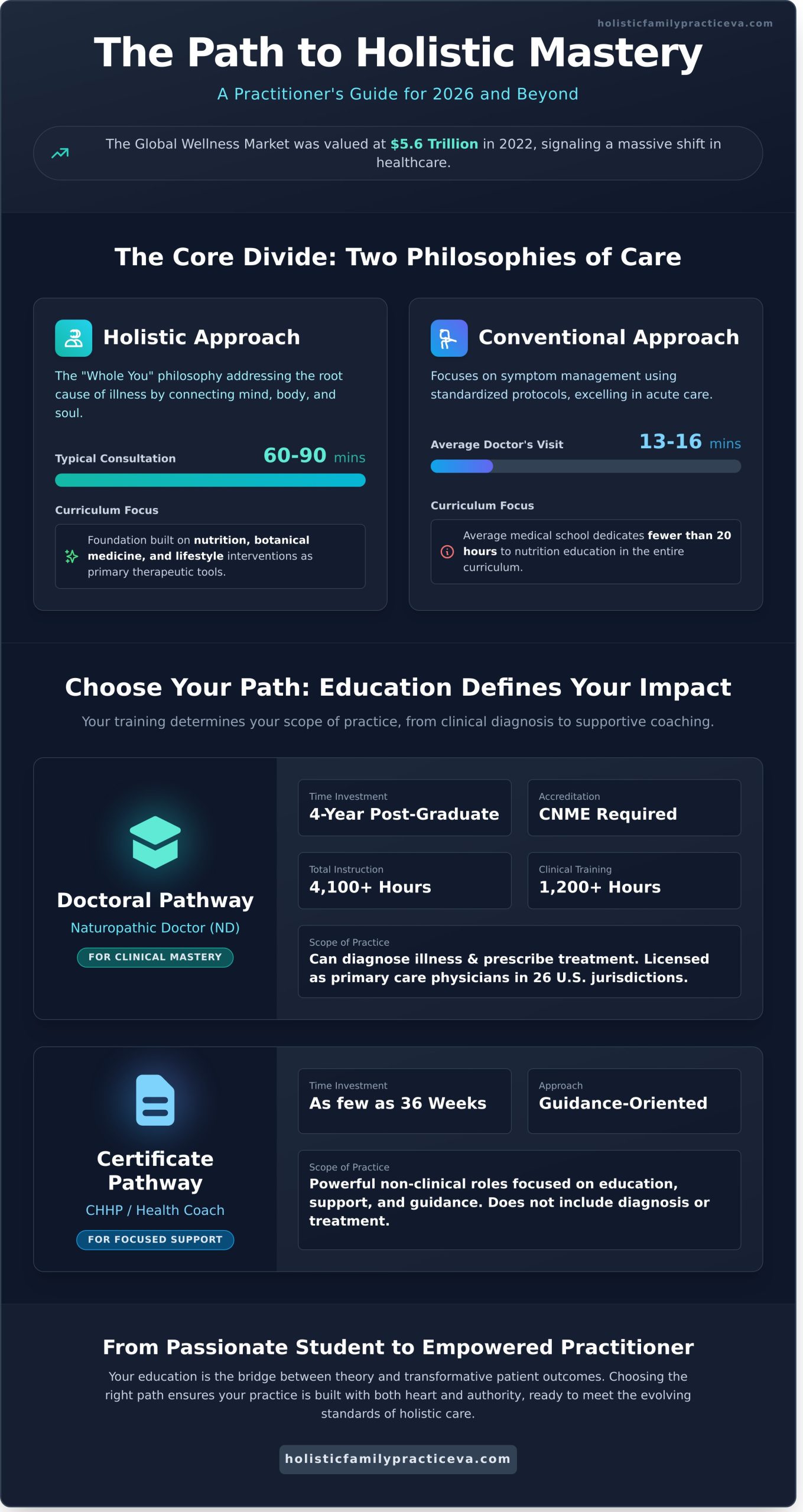
As we move further into this decade, the demand for this approach is reshaping healthcare. The Global Wellness Institute valued the wellness market at $5.6 trillion in 2022, a clear signal that people are actively seeking a more empowering and comprehensive path to health. The old model is no longer enough. By 2026, the standards for a holistic practitioner are shifting from a niche alternative to a vital component of integrative care, working alongside mainstream medicine to provide a complete picture of well-being. Understanding this evolution is the first step in pursuing a meaningful holistic health practitioner education.
The Core Philosophy: Beyond Symptom Management
The core of holistic health is the “Whole You” approach. It recognizes that your mental state, emotional resilience, and physical body are deeply interconnected. Persistent anxiety doesn’t just live in your mind; it can manifest as digestive issues, skin problems, or chronic inflammation. A holistic practitioner connects these dots. The goal is to uncover the “why” behind your symptoms—the root cause. This methodology is the gold standard because it empowers you with knowledge and self-agency, transforming you from a passive patient into an active partner on your health journey.
Holistic vs. Conventional Education: Key Differences
The training path for a holistic practitioner diverges significantly from a conventional medical route. While both are rooted in science, their focus and application differ dramatically. The choice you make in your holistic health practitioner education will define how you see and treat the human body. Key distinctions include:
- Curriculum Focus: Conventional medical school curriculum dedicates, on average, fewer than 20 hours to nutrition. In contrast, holistic programs build their foundation on nutrition, botanical medicine, and lifestyle interventions as primary therapeutic tools.
- Patient Interaction: The average conventional doctor’s visit now lasts between 13 and 16 minutes. A holistic practitioner’s initial consultation often spans 60 to 90 minutes, creating the necessary space for a deep-dive investigation into your health history, environment, and lifestyle.
- Clinical Approach: Conventional medicine excels with standardized protocols for acute issues. Holistic care blends evidence-based science with trained clinical intuition to create highly personalized plans. This approach is a cornerstone of many disciplines within the broad field of Alternative medicine, where understanding the individual’s unique story is paramount to healing.
Choosing Your Path: Degrees, Certifications, and Licenses
Your journey into holistic health begins with a foundational choice: what level of education will best serve your calling? This decision isn’t just about a diploma; it’s a commitment that defines your scope of practice, your time investment, and the depth of care you can provide. The right holistic health practitioner education balances your personal goals with the real-world impact you want to make. Think of it as an investment. A shorter program offers a quicker path to practice, while a doctoral degree unlocks a comprehensive ability to diagnose and treat at the root cause.
Doctoral Pathways: Naturopathic Doctors (ND)
The path to becoming a Naturopathic Doctor (ND) is a rigorous, four-year post-graduate commitment, equivalent in structure to conventional medical school. Students at accredited institutions complete over 4,100 hours of instruction and 1,200 hours of supervised clinical training. This demanding curriculum is why accreditation from the Council on Naturopathic Medical Education (CNME) is non-negotiable; it ensures you receive a science-based medical education. As of 2024, NDs can be licensed as primary care physicians in 26 U.S. jurisdictions, allowing them to diagnose illness and prescribe treatments. This is the demanding yet rewarding path taken by practitioners like our own Meet Dr. Erica Steele, who are committed to providing a primary care level of holistic service.
Certificate Programs: CHHP and Health Coaching
For those seeking a focused, non-clinical role, certificate programs offer a powerful alternative. Institutions like the Trinity School of Natural Health provide Certified Holistic Health Practitioner (CHHP) programs that can be completed in as few as 36 weeks. The scope here is vital to understand: you can educate, coach, and empower clients on nutrition and lifestyle, but you cannot diagnose, treat, or cure disease. These practitioners often provide what the National Center for Complementary and Integrative Health defines as complementary approaches, working alongside licensed medical providers. A certificate is an excellent way to deepen the expertise of existing professionals like registered nurses, dietitians, or personal trainers, allowing them to integrate holistic principles into their current practice.
The Virginia Perspective: Local Educational Resources
Here in our home state, the landscape has its own unique features. While Virginia does not currently offer licensure for Naturopathic Doctors, it is home to pioneering institutions like the Virginia University of Integrative Medicine in Fairfax. For aspiring practitioners in the 757 area, this means operating as a wellness consultant or health coach requires a crystal-clear understanding of your legal scope. Building a strong professional network for mentorship and referrals isn’t just helpful; it’s essential for a thriving and compliant practice. Building these local connections is key, which is why we are so passionate about fostering a community of wellness practitioners right here in Virginia Beach.
The Clinical Mastery Gap: What Schools Don’t Teach
You’ve earned the degree. You’ve mastered the anatomy, the biochemistry, and the protocols. So why does a gap still exist between your academic knowledge and consistent, life-changing patient outcomes? The truth is, your formal holistic health practitioner education provides the essential foundation, but it doesn’t always teach you the art of translation. The single most critical skill missing from many curricula is the ability to transform complex, raw data into a simple, empowering, and actionable wellness plan that a patient can actually follow.
This is where the journey toward true clinical excellence begins. It’s a post-graduate pursuit we call Functional Medicine Mastery. While foundational integrative medicine degree programs give you the scientific vocabulary, mastery teaches you how to conduct the orchestra. It’s about seeing the interconnectedness of systems and communicating it with clarity and compassion. To bridge this gap, we champion Dr. Steele’s core philosophy: “Know Your Numbers.” This isn’t just about reading a lab report; it’s about understanding the story behind the data and using it to empower your patient’s health journey.
Mastering Functional Lab Analysis
Think of blood work and metabolic panels as the native language of the body. They communicate subtle shifts and cries for help long before symptoms become a full-blown diagnosis. Standard medical training teaches you to spot disease by identifying values outside the broad “normal” range. But a functional approach asks a different question: what is optimal? For example, a conventional lab may flag a Vitamin D level as “normal” at 31 ng/mL, but functional practitioners know that a level below 50 ng/mL can impair immune function for many individuals. Clinical mastery requires the ability to interpret functional lab panels to see the story the body is telling before disease manifests.
Building Intuitive Practitioner Skills
The most profound diagnostic tool you have is your ability to listen. The art of the patient interview goes far beyond the intake form; it’s about hearing the unspoken symptoms hidden in their stories, tone, and energy. This is where science meets soul. Developing a gentle authority, rooted in deep compassion, allows you to guide patients without commanding them. It builds the trust necessary for them to make sustainable changes. Ultimately, authenticity is the secret ingredient. A soul-led practice, one that is a true expression of your calling, creates a healing space where patients feel seen, heard, and truly cared for.
Navigating Board Certification and Legal Requirements
Completing your coursework is a huge milestone on your wellness journey. But translating that knowledge into a thriving, ethical practice requires a deep understanding of the legal and professional landscape. This is where true mastery begins. It’s not just about what you know; it’s about how you apply it safely, legally, and with complete transparency to build unshakable trust with your clients.
Think of board certification and legal compliance as the strong, supportive container that holds your practice. It protects you, empowers your clients, and validates the high standards of your holistic health practitioner education. The two most recognized board certification bodies for practitioners are:
- American Naturopathic Medical Certification Board (ANMCB): This board offers certification for traditional naturopaths who have graduated from an approved program, typically requiring at least 250 educational hours. It signifies a standardized level of knowledge in the field.
- Board Certified in Integrative Pediatrics (BCIP): A specialized certification for practitioners focusing on children’s health, demonstrating advanced competency in pediatric integrative care.
Beyond certification, you must understand the laws where you practice. In the United States, there is no single federal law governing holistic health; it’s a patchwork of state regulations. Many states have “Title Protection” laws. This means only practitioners with specific licenses (like licensed Naturopathic Doctors in states like Arizona or Washington) can use certain titles. Using a protected title without a license can result in fines of up to $5,000 per violation in some jurisdictions.
National vs. State Requirements
For doctoral-level practitioners seeking licensure, passing the Naturopathic Physicians Licensing Examinations (NPLEX) is mandatory. For non-licensed practitioners, operating legally often falls under “Health Freedom Laws,” which have been passed in 11 states, including Minnesota (2000) and Idaho (2018). These laws protect your right to practice as long as you provide a clear disclaimer stating you are not a medical doctor and secure written informed consent from every client.
The Business of Holistic Health
Even in a cash-pay model, setting up a National Provider Identifier (NPI) number is a crucial step for ordering functional labs. At Holistic Family Practice, we intentionally operate on a cash-pay basis. This frees us from the constraints of insurance billing, which often limits visit times to under 15 minutes. Instead, we can dedicate our full attention to you. Your credentials are your story; leading with your board certification on your website immediately tells clients you are committed to the highest professional standards.
Protecting your practice is non-negotiable. Professional liability insurance is essential, with policies for holistic practitioners typically costing between $450 and $1,500 annually. This investment protects both your livelihood and your clients’ well-being, allowing you to practice with confidence and integrity.
As you build your practice, remember that compliance isn’t about limitation; it’s about creating a safe and trustworthy space for healing. If you’re seeking guidance on how to translate your holistic health practitioner education into a compliant and soul-aligned practice, explore our mentorship programs for practitioners.
Next Steps: Empowering Your Holistic Career Journey
You’ve walked the path from curious student to capable practitioner. Your initial training built the essential framework, but true clinical mastery is a dynamic journey, not a final destination. The transition from theory to practice is where your unique gifts will truly shine. This is your moment to transform knowledge into profound, life-changing results for your clients and build a practice that feels both successful and soul-led.
Continuing Education and Specialization
The wellness landscape is constantly evolving. To serve your clients at the highest level, you must become a dedicated lifelong learner. Consider the rapid advancements in metabolic and mental health research. The CDC’s 2023 National Diabetes Statistics Report revealed that 136 million U.S. adults are now living with diabetes or prediabetes, making advanced metabolic knowledge more critical than ever. Staying current isn’t just an option; it’s a responsibility.
Embracing technology is key to expanding your impact. Since 2020, telehealth adoption has stabilized at levels 38 times higher than before the pandemic, according to a May 2023 analysis by McKinsey & Company. By adding secure virtual services, you aren’t just modernizing your practice; you’re opening your doors to a global audience seeking your specific expertise. You can also leverage this digital reach by hosting educational webinars. These events position you as an authority in your niche and can create a secondary revenue stream, with practitioners often reporting a 15-20% increase in new client inquiries within six months of launching a consistent webinar series.
To truly get to the root of your clients’ issues, you must master the art of data interpretation. That’s why we created the Voltie-style Functional Medicine Lab Panel Mastery course. This advanced program is your next logical step, teaching you how to confidently analyze complex lab results and create precise, effective wellness plans. It’s time to help your clients truly Know Your Numbers and take control of their health story.
Join the Holistic Family Practice Community
You don’t have to build your career alone. Dr. Erica Steele is passionately committed to supporting the next generation of practitioners through mentorship and advanced clinical guidance. We believe that a strong community fosters growth, resilience, and inspiration. Your journey is our journey, and we are here to help you navigate the challenges and celebrate the wins.
Are you ready to elevate your practice, refine your clinical skills, or find a wellness partner to guide your professional growth? A complimentary Discovery Call is the perfect starting point. This is your opportunity to connect with our team, ask your most pressing questions, and discover how our mentorship can accelerate your path to mastery.
Your holistic health practitioner education is the powerful foundation upon which you will build a wholesome, soul-led career. It has prepared you to do incredible work. Now, let’s build on it together. Book your Discovery Call today and step into the next chapter of your empowering health journey.
Your Journey to Clinical Mastery Starts Now
Your path forward in 2026 is clear. It’s not just about choosing a degree; it’s about actively closing the clinical gap that many programs leave open. The most successful practitioners will be those who master both the art of compassionate care and the science of diagnostics. Your holistic health practitioner education is your foundation, but true impact comes from translating that knowledge into confident, real-world results for the mind, body, and soul.
Gaining that confidence means seeking mentorship beyond the classroom. It’s about learning to find the root cause of illness by truly understanding the data. Dr. Erica Steele, an expert in Naturopathic and Functional Medicine, empowers practitioners with her Functional Medicine Lab Panel Mastery Course to gain that essential clinical edge. It’s time to move from student to master.
Empower your health journey and master your numbers with Dr. Erica Steele. Your calling to heal others deserves the most powerful tools available.
Frequently Asked Questions About Holistic Health Education
Do I need a medical degree to be a holistic health practitioner?
No, you don’t need a medical degree (MD) to become a holistic health practitioner. While some practitioners are MDs who integrate holistic methods, many successful professionals enter the field through specialized certification programs or degrees in areas like nutrition or health coaching. The path you choose depends on the specific services you want to offer your clients as you guide them on their wellness journey.
What is the average salary for a certified holistic health practitioner in 2026?
The average salary for a certified holistic health practitioner in 2026 is projected to fall between $62,000 and $85,000 annually. This range depends on your location, specialization, and whether you operate a private practice or work within a larger wellness center. Practitioners who build a strong client base or offer unique corporate wellness programs can often earn well above this average, reflecting their dedication and expertise.
Can I practice holistic medicine online or via telehealth?
Yes, you can absolutely practice holistic medicine online. Telehealth is a powerful and growing tool for practitioners, with over 75% of health systems planning to expand their virtual services by 2025. Using secure platforms like SimplePractice or Doxy.me, you can offer coaching, consultations, and educational support to clients anywhere. This digital approach makes holistic care more accessible and empowers more people to begin their health journey.
What is the difference between a Naturopathic Doctor and a Holistic Health Coach?
A Naturopathic Doctor (ND) and a Holistic Health Coach have very different educational paths and roles. An ND completes a four-year, graduate-level program from an accredited medical school and can be licensed as a primary care physician in 26 U.S. jurisdictions, allowing them to diagnose and treat illness. A health coach typically earns a certification and focuses on empowering clients through guidance on nutrition, lifestyle, and achieving wellness goals, without providing medical diagnoses.
How long does it take to complete holistic health practitioner education?
The time it takes to complete your holistic health practitioner education depends entirely on the program you choose. Focused certification programs can often be completed in as little as 6 to 12 months, providing a strong foundation in holistic principles. In contrast, a comprehensive bachelor’s or master’s degree in a field like holistic nutrition or integrative health will require two to four years of dedicated study for deeper clinical mastery.
Is board certification mandatory for holistic practitioners?
Board certification isn’t mandatory in every state for every type of holistic practice, but it’s highly recommended for establishing professional credibility. Earning a credential from a respected body, like the National Board for Health & Wellness Coaching (NBHWC), signals to clients that you’ve met rigorous standards of competence and ethics. It’s a vital step in building trust and a thriving, soul-centered practice.
Are there accredited holistic health schools in Virginia?
Yes, Virginia offers several excellent options for accredited holistic health education. For example, George Mason University’s Center for the Advancement of Well-Being has programs focused on well-being and resilience. You can also find specialized training at institutions like the Cayce/Reilly School of Massage in Virginia Beach. We always encourage you to verify a school’s accreditation through the U.S. Department of Education to ensure the quality of your learning experience.
How much does holistic health practitioner education cost?
The cost of holistic health practitioner education varies widely based on the credential you are pursuing. A specialized certification program from a respected online institute might cost between $3,000 and $8,000. A full bachelor’s or master’s degree from an accredited university represents a larger investment, typically ranging from $25,000 to over $60,000 for the entire program. It’s important to research options that align with your career goals and budget.