
Have you ever felt like your mind operates on a completely different wavelength, that the daily overwhelm of sensory input or scattered focus means you’re somehow “broken”? What if these experiences aren’t flaws, but vibrant colors in a complex and beautiful tapestry? This is the core idea behind the empowering concept of the rainbow brain, a way of understanding the incredible spectrum of neurodiversity, particularly for those who experience the world through the combined lens of autism and ADHD (AuADHD).
Your journey toward self-compassion and empowerment begins now. In this guide, we will gently move beyond clinical labels to explore what it truly means to thrive with a neurodivergent mind. You will learn how to reframe your unique traits as profound strengths, discover holistic strategies to navigate challenges with grace, and find the validation you deserve. It’s time to stop trying to “fix” your brain and start celebrating its unique brilliance.
Decoding the ‘Rainbow Brain’: A New Term for Neurodiversity
In our journey toward understanding the whole self, language is a powerful tool. A beautiful new term is emerging in wellness circles that reframes how we talk about neurological differences: the rainbow brain. This is more than just a colorful phrase; it’s an empowering metaphor for the unique, complex, and vibrant wiring of a neurodivergent mind. It encourages us to move beyond seeing individual traits or challenges and instead appreciate the whole, brilliant picture that these “colors” create together.
The Origin: More Than Just a Children’s Book
The term gained popularity from Sandhya Menon’s children’s book, which lovingly describes the experience of having both Autism and ADHD. By providing a neuro-affirming identity, it helps children see their minds as a source of strength. Now, adults are embracing this gentle language to rewrite their own stories, shedding decades of clinical labels in favor of a term that celebrates their authentic way of being.
Understanding AuADHD: The Core of the Rainbow Brain Concept
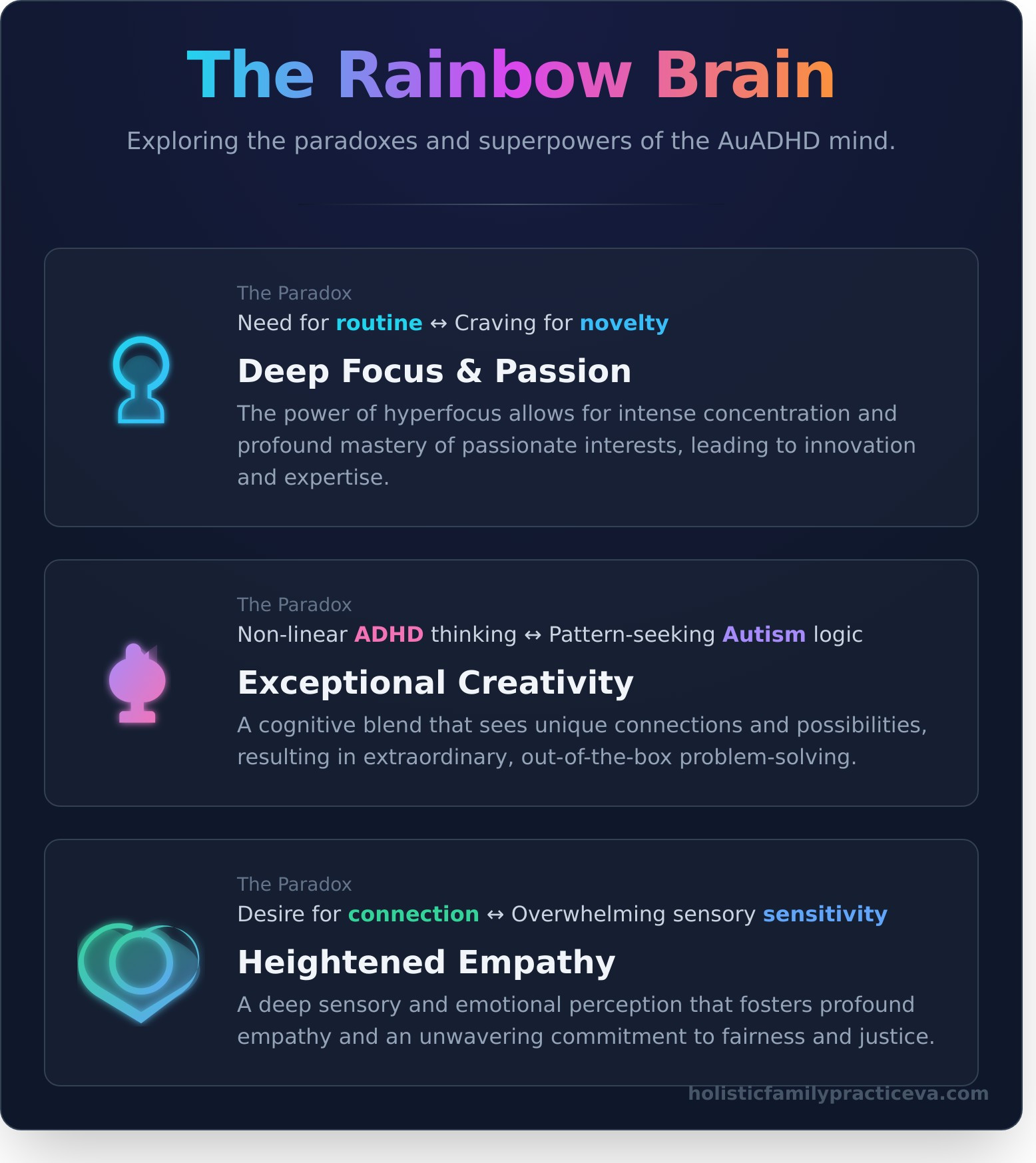
At its heart, the rainbow brain concept was born from the AuADHD experience-the combined presence of Autism Spectrum Disorder (ASD) and Attention-Deficit/Hyperactivity Disorder (ADHD). This intersection creates a unique internal landscape often characterized by compelling paradoxes:
- A deep need for predictable routines clashing with an intense craving for novelty.
- The ability for hyperfocus on passionate interests alongside challenges with executive function for daily tasks.
- A desire for social connection paired with sensory sensitivities that can make socializing overwhelming.
These traits can amplify or mask one another, creating an experience that is far more nuanced than either diagnosis alone.
Beyond AuADHD: Embracing a Broader Spectrum
While rooted in the AuADHD community, the term’s spirit resonates across many forms of neurodivergence. It captures the essence of a brain with diverse processing styles, from dyslexia to synesthesia. This shift in perspective is central to the concept of neurodiversity, which champions the idea that neurological differences are natural variations, not deficits. It’s about moving from a model of fixing what’s “wrong” to nurturing the inherent strengths of every unique mind.
The Strengths and Superpowers of a Rainbow Brain
For too long, the conversation around neurodiversity has focused on challenges and deficits. We believe it’s time to shift the perspective. Your unique brain wiring isn’t a flaw; it’s a different operating system equipped with incredible, often untapped, strengths. Understanding your rainbow brain means learning to see these traits not as symptoms to be managed, but as superpowers to be harnessed on your personal wellness journey.
Deep Focus and Passionate Interests
What is often labeled as an “obsessive” or “narrow” interest is, in reality, the power of hyperfocus. This is the ability to dive into a subject with an intensity and concentration that is truly remarkable. It allows for a profound level of mastery and expertise, paving the way for innovation. Think of the musician who can practice for eight hours straight, the scientist who uncovers a breakthrough after a month of uninterrupted research, or the gardener who develops an intuitive sense of what their plants need. This is not a distraction; it is a deep, passionate engagement with the world.
Exceptional Creativity and Problem-Solving
A neurodivergent mind often excels at thinking differently. By combining the expansive, non-linear thought process common in ADHD with the powerful pattern-recognition skills seen in autism, you get a recipe for extraordinary problem-solving. This cognitive blend allows you to see connections and possibilities that others might overlook, a trait now being explored by researchers studying the Superpowers of a Rainbow Brain. It’s the entrepreneur who combines two unrelated industries to create a new market or the artist who finds a novel medium to express a universal truth.
Heightened Empathy and a Strong Sense of Justice
Do you feel things deeply? Is your awareness of the emotions and energy of others almost overwhelming at times? This heightened sensory and emotional perception, while challenging, is the source of profound empathy. You don’t just understand how someone feels; you can often feel it with them. This deep connection to the human experience fuels an unwavering commitment to fairness, equality, and justice. It’s the friend who always shows up with exactly what you need or the advocate who fights tirelessly for those whose voices are not being heard.
Recognizing these strengths is the first step toward embracing your authentic self. Instead of trying to fit into a neurotypical mold, the journey is about creating a life that celebrates your innate gifts. What is one strength you’ve noticed in yourself that you can begin to nurture today?
Navigating the Challenges of a Rainbow Brain Holistically
Living with a rainbow brain means experiencing the world with incredible depth and intensity. While this brings immense creativity and insight, it can also present real-world challenges. It’s essential to validate these difficulties not as flaws to be fixed, but as unique aspects of your wiring that deserve compassionate support. This perspective is at the heart of the neurodiversity paradigm, which encourages us to develop skills for navigating the world, rather than trying to change who we are at our core.
Managing Sensory and Emotional Overwhelm
When your brain processes a high volume of sensory and emotional information, overwhelm is a common experience. The key is to create a personal sanctuary that honors your needs. Instead of forcing yourself to endure, empower yourself with tools that regulate your nervous system.
- Sensory Toolkit: Keep noise-canceling headphones, sunglasses, or a weighted lap pad accessible to reduce intense input.
- Mindful Grounding: When emotions feel big, practice simple breathwork. Inhale for four counts, hold for four, and exhale for six. This sends a signal of safety to your brain.
Supporting Executive Function with Compassion
Executive functions-the mental skills that help you plan, organize, and manage your time-can be a source of frustration. Rather than fighting against your brain, learn to work with it. Self-compassion is your most powerful tool. Acknowledge the effort it takes and celebrate small wins.
- Make it Visual: Use visual timers, calendars, or Kanban boards to see time and tasks tangibly.
- Break it Down: A large task can feel paralyzing. Break it into tiny, manageable steps (e.g., “open laptop” instead of “write report”).
- Body Doubling: Work alongside a friend, either in person or virtually, to create gentle accountability and focus.
Avoiding Burnout and Prioritizing Rest
Because processing the world takes more cognitive and social energy, burnout is a significant risk. Rest isn’t a luxury; it’s a non-negotiable part of your wellness journey. The concept of “spoon theory” can be a helpful guide-visualize your daily energy as a set number of spoons. Every task costs a spoon, so you must choose wisely to avoid running out. Schedule intentional downtime to recharge, just as you would schedule an important meeting. This proactive approach to rest is foundational to thriving with a vibrant, neurodivergent mind.
A Functional Medicine Approach to Nurturing Your Brain
While techniques like visualization and meditation are powerful tools for mental wellness, a truly vibrant and resilient rainbow brain is built upon a foundation of deep physical health. A functional medicine approach shifts the focus from merely managing symptoms like brain fog, anxiety, or low mood to optimizing the entire system. We believe in asking why these imbalances are happening in the first place, empowering you to see your body and brain as one interconnected, intelligent system.
The Gut-Brain Axis: Your Second Brain
Did you know that your gut is often called your “second brain”? This is because it produces a significant amount of your body’s neurotransmitters. Chronic gut inflammation can disrupt the production of mood-regulators like serotonin and dopamine, directly impacting how you feel. Nurturing this connection through a whole-foods, anti-inflammatory diet and incorporating beneficial probiotics and prebiotics is a foundational step toward achieving mental clarity and emotional balance.
Targeted Nutrition for a Balanced Mind
Your brain is hungry for specific nutrients, and a one-size-fits-all diet rarely provides the targeted support needed for optimal function. Stabilizing your blood sugar with balanced meals is crucial for consistent focus and energy. Key nutrients for brain health include:
- Omega-3 Fatty Acids: Found in fatty fish and flaxseeds, they are essential for building healthy brain cell membranes.
- B Vitamins: Critical for energy production and creating the neurotransmitters that govern your mood.
- Magnesium: A calming mineral that helps soothe the nervous system and can improve sleep quality.
Identifying Root Causes Through Advanced Testing
Instead of guessing what your body needs, we can use advanced functional lab tests to uncover the hidden stressors impacting your cognitive and emotional health. These tests can reveal underlying issues such as nutrient deficiencies, food sensitivities, or hormonal imbalances that contribute to brain-based symptoms. This data provides a personalized roadmap, allowing us to create a wellness plan that addresses the root of the problem for lasting results. It’s the key to building a truly healthy rainbow brain from the inside out.
Ready to stop guessing and start healing? Start understanding your body’s unique needs with a discovery call.
Embrace the Full Spectrum of Your Mind
Understanding neurodiversity is a journey of empowerment, one that shifts the focus from challenges to the incredible strengths and unique perspectives you possess. It’s about recognizing that a holistic approach-one that nurtures your mind, body, and soul-is key to unlocking your full potential. Embracing your rainbow brain means celebrating your authentic self and learning how to provide it with the precise support it needs to thrive.
If you’re ready to take the next step, you don’t have to do it alone. Led by Dr. Erica Steele, a compassionate naturopathic doctor, our practice is built on root-cause analysis and personalized, whole-person care. We look beyond symptoms to truly understand you. Ready to empower your health journey? Book a discovery call to explore your unique path to wellness. Your vibrant mind deserves to be understood and celebrated.
Frequently Asked Questions About the Rainbow Brain
Is ‘rainbow brain’ a medical diagnosis?
No, ‘rainbow brain’ is not a formal medical diagnosis. It’s an empowering and compassionate term we use to describe the beautiful spectrum of neurodiversity, including conditions like ADHD, autism, and sensory processing disorders. This concept helps us shift the focus from deficits to the unique strengths, creativity, and perspectives that come with thinking and experiencing the world differently. It’s a way to honor the whole person on their wellness journey.
How do I know if I or my child has a rainbow brain?
You might recognize traits like intense focus on passions, heightened creativity, or sensitivities to light, sound, or textures. It can also manifest as unique ways of processing emotions or navigating social situations. The key isn’t a checklist of symptoms, but rather a deep, intuitive understanding that you or your child operate on a different, often brilliant, wavelength. A holistic evaluation can help connect these dots in a supportive way.
Can diet and lifestyle changes really impact ADHD or autism symptoms?
Absolutely. Your brain’s health is directly connected to your body’s wellness. Simple changes, like incorporating nutrient-dense whole foods and removing inflammatory triggers like processed sugar or gluten, can significantly reduce brain fog and improve focus. Similarly, prioritizing quality sleep, joyful movement, and time in nature provides the foundational support your nervous system needs to find balance and thrive. It’s about creating a nurturing environment from the inside out.
What is the difference between having a rainbow brain and just being ‘quirky’?
While everyone has lovely quirks, a rainbow brain describes a consistent, fundamental difference in neurological wiring. These are not just occasional habits but core aspects of how a person processes information, perceives their environment, and regulates their focus and emotions. It’s about the underlying operating system. This distinction helps us validate the real challenges and celebrate the profound strengths that come with a neurodivergent mind, moving beyond surface-level personality traits.
How can functional medicine help when conventional treatments haven’t?
Functional medicine seeks to understand the “why” behind your symptoms. Instead of a one-size-fits-all approach, we look at the whole you-investigating root causes like gut imbalances, nutrient deficiencies, or hidden inflammation through targeted testing. This allows us to create a deeply personalized roadmap to wellness that supports your body’s innate healing ability. It’s a partnership designed to empower you with answers and create lasting change where other methods may have stalled.
Are there specific supplements that are good for a rainbow brain?
While a personalized plan is always best, certain nutrients are foundational for brain health. Omega-3 fatty acids are vital for cognitive function, magnesium can promote calmness and better sleep, and B-vitamins support healthy neurotransmitter production. A quality probiotic can also strengthen the crucial gut-brain axis. However, we always recommend testing, not guessing, to ensure you are nourishing your body with exactly what it needs to flourish.