You take your thyroid medication every day, just as prescribed. Your doctor glances at your labs and tells you your TSH level is “normal.” So why do you still feel exhausted, battling persistent brain fog and stubborn weight that just won’t budge? If this frustrating cycle sounds achingly familiar, please know you are not alone, and your symptoms are deeply real. True vitality is found when we honor the fact that you are more than a lab number.
This is where your healing journey can truly begin. By looking beyond the prescription, we can start to address the whole picture of your health. A holistic approach to hypothyroidism recognizes the intricate web connecting your thyroid to your gut health, your stress response, your nutrition, and your spirit. It’s about moving from passively managing a condition to actively participating in your own wellness, mind, body, and soul.
In this guide, we will empower you with the knowledge to understand these connections. You will discover supportive, actionable strategies to address the root causes of your symptoms, reclaim your energy, and feel vibrant in your body again. It’s time to start your journey toward thriving.
Beyond the Pill: What a Holistic Approach to Hypothyroidism Really Means
Does this sound familiar? You’ve been diagnosed with hypothyroidism, you’re taking your medication, but you still feel exhausted, foggy, and frustrated. Your doctor says your lab results are “normal,” yet your symptoms tell a different story. If you’re tired of feeling unheard, you are not alone.
This is where a holistic approach to hypothyroidism shines. It’s a philosophy that moves beyond simply managing symptoms with a pill and instead asks a powerful question: Why is your thyroid struggling in the first place? While conventional medicine provides a vital foundation, offering a comprehensive overview of hypothyroidism and its standard treatments, it often addresses only one piece of the puzzle. We see your body as an interconnected system, where thyroid health is deeply linked to your gut, adrenals, and overall lifestyle. Our goal is to uncover the root causes and empower your body’s innate ability to heal and find balance.
Why Your TSH Score Isn’t the Whole Story
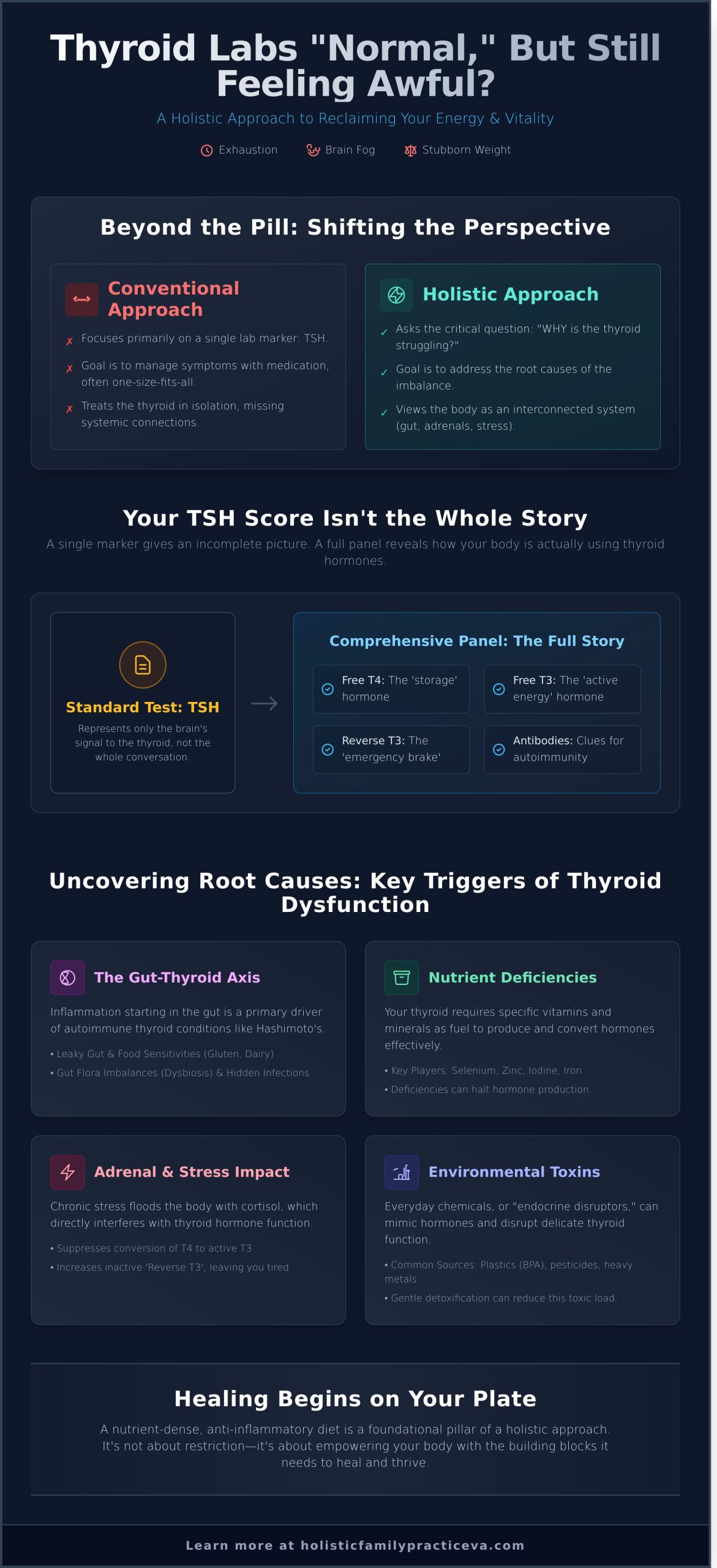
Your TSH (Thyroid-Stimulating Hormone) score is an important starting point, but it’s a message from your brain’s pituitary gland, not a direct measure of how well your body is using thyroid hormone at the cellular level. To truly “Know Your Numbers” and understand your function, we look at a full panel, including:
- Free T4: The primary storage hormone made by the thyroid.
- Free T3: The active hormone your cells need for energy.
- Reverse T3: An inactive hormone that can block active T3 during times of stress.
This complete picture helps us see where the communication breakdown is happening.
You Are More Than Your Thyroid: Looking at the Whole Person
Your thyroid doesn’t operate in a vacuum. A truly effective holistic approach to hypothyroidism recognizes that your genetics, environment, and daily choices all play a crucial role. We partner with you to create a personalized wellness plan that addresses the whole you-exploring your nutrition, managing stress, optimizing sleep, and supporting your emotional well-being. This isn’t just a treatment; it’s an empowering journey to reclaim your vitality and become an active, knowledgeable participant in your own health.
Uncovering Your Root Causes: The Functional Medicine Investigation
Your journey to wellness begins not with guesswork, but with a deep and compassionate investigation into your unique body. A true holistic approach to hypothyroidism moves beyond just managing symptoms; it seeks to understand why your thyroid is struggling in the first place. This process starts by listening to your story-your detailed health history and the full spectrum of your symptoms provide the first essential clues. We then pair your experience with targeted, advanced testing to create a complete picture of your health.
Comprehensive Thyroid Panel: The Essential Tests to Ask For
To truly understand your thyroid function, a single TSH test is not enough. While standard care often focuses only on TSH to diagnose Hypothyroidism (Underactive Thyroid), a full panel gives us the clarity we need. Empower yourself to “Know Your Numbers” by asking for these key tests:
- TSH (Thyroid-Stimulating Hormone): The signal from your brain to your thyroid.
- Free T4 & Free T3: The actual active and storage thyroid hormones available for your cells to use.
- Reverse T3: An inactive hormone that can block T3 when the body is under stress.
- TPO and TG Antibodies: These reveal if an autoimmune condition, Hashimoto’s Thyroiditis, is the root cause of your thyroid issue.
Identifying Key Triggers: Gut Health, Nutrients, and Stress
Your thyroid doesn’t operate in a vacuum. Its health is intricately connected to other systems in your body. We investigate three primary areas that often trigger thyroid dysfunction:
- The Gut-Thyroid Axis: Issues like leaky gut, hidden infections, gut flora imbalances (dysbiosis), and food sensitivities (especially to gluten and dairy) can create inflammation that drives autoimmune thyroid conditions.
- Nutrient Deficiencies: Your thyroid requires specific vitamins and minerals to function. We often find deficiencies in key players like selenium, zinc, iodine, and iron are holding back thyroid hormone production and conversion.
- Adrenal & Stress Impact: Chronic stress floods your body with the hormone cortisol, which can suppress the conversion of T4 to the active T3 hormone, leaving you feeling tired and sluggish despite “normal” lab results.
Environmental Factors and Toxin Exposure
Every day, we encounter environmental toxins that can disrupt our delicate hormonal balance. Endocrine disruptors found in plastics (BPA), pesticides, and heavy metals can interfere with thyroid function. A foundational part of a holistic approach to hypothyroidism involves gently reducing this toxic load. Simple steps like switching to glass food storage and filtering your drinking water can make a meaningful difference.
Ready to move beyond the symptoms and discover your unique “why”? Start understanding your body better with a discovery call.
Foundational Pillars: Healing Your Thyroid with Nutrition and Gut Support
Your healing journey begins on your plate. A core principle of the holistic approach to hypothyroidism is understanding that food is powerful medicine. The right foods can calm inflammation, provide essential building blocks for hormone production, and restore your energy. Conversely, certain foods can fuel the fire of autoimmunity and disrupt thyroid function. Adopting a nutrient-dense, anti-inflammatory diet isn’t about restriction; it’s about empowerment and nourishing your body from the inside out.
Key Nutrients for Your Thyroid: What to Eat
Think of these nutrients as your thyroid’s best friends. Focusing on whole, wholesome foods is the most effective way to ensure you’re getting what your body needs to thrive.
- Selenium: This mighty mineral is crucial for converting the inactive T4 hormone into the active T3 hormone your cells can use. Just 1-2 Brazil nuts a day can meet your needs! Other great sources include sardines and grass-fed beef.
- Zinc: Essential for stimulating the production of thyroid hormone. You can find this vital nutrient in oysters, pumpkin seeds, and lentils.
- Iodine: Your thyroid needs iodine to make its hormones, but it’s a delicate balance. Too much or too little can be problematic. Wholesome sources like seaweed, cod, and eggs are often safer than high-dose supplements.
- Vitamin D & Iron: Deficiencies in both are incredibly common in those with hypothyroidism and can worsen symptoms like fatigue and hair loss. It’s vital to “Know Your Numbers” through testing and supplement wisely under guidance.
The Gut-Thyroid Connection: Healing from Within
Did you know that your gut health is non-negotiable for a happy thyroid? An imbalanced gut microbiome or increased intestinal permeability (often called ‘leaky gut’) can trigger an autoimmune response, which is the root cause of Hashimoto’s thyroiditis. When undigested food particles and toxins leak into the bloodstream, the immune system can become over-activated and mistakenly attack the thyroid gland. While there is no single best hypothyroidism diet for everyone, identifying and removing personal food sensitivities, most commonly gluten and dairy, can dramatically reduce inflammation and calm this autoimmune response. Support your gut with healing foods like bone broth, fiber-rich vegetables, and fermented foods like kimchi or sauerkraut to create a foundation for lasting thyroid wellness.
Calming the System: The Critical Role of Stress Management and Lifestyle
True healing from hypothyroidism goes far beyond a prescription. It involves nurturing your entire being, especially your body’s stress response system. Think of your brain, adrenal glands, and thyroid as being in constant communication through a network called the HPA (Hypothalamic-Pituitary-Adrenal) axis. When you experience chronic stress-whether from work, emotional strain, or hidden inflammation-your adrenal glands release high levels of the stress hormone, cortisol. This sustained cortisol surge can suppress thyroid hormone production and block its conversion into the active form your cells can use. A truly holistic approach to hypothyroidism recognizes that you cannot heal the thyroid without calming the nervous system.
Restorative Sleep: Your Thyroid’s Best Friend
Deep, restorative sleep is when your body does its most important repair work. Without it, hormone regulation falters and inflammation rises, creating a cycle that further taxes your thyroid. To reclaim your rest, create a sanctuary for sleep. Commit to a consistent bedtime, make your room as dark and cool as possible, and power down screens at least an hour before bed to protect your natural melatonin production. Consider a calming ritual like sipping herbal tea or gentle stretching to signal to your body that it’s time to wind down.
Mindful Movement and Relaxation Techniques
While exercise is vital, pushing your body through intense, grueling workouts can actually increase cortisol and act as another stressor. Instead, embrace mindful movement that soothes your nervous system.
- Gentle yoga or tai chi
- Walks in nature
- Light swimming or cycling
Pairing movement with daily relaxation is a powerful combination. Just five minutes of deep belly breathing or a guided meditation can shift your body out of “fight-or-flight” and into a state of healing and repair.
Reducing Your Environmental Toxin Load
Our modern world exposes us to countless chemicals that can disrupt endocrine function and burden our detoxification pathways. Taking small, empowered steps to reduce this load can make a significant difference. Start by swapping harsh chemical cleaners for simple solutions like vinegar and water. Choose personal care products that are fragrance-free, and consider filtering your drinking water to reduce exposure to chlorine and fluoride. Each simple change lightens the load on your body, freeing up energy for healing.
Creating a lifestyle that prioritizes rest, gentle movement, and a clean environment is a foundational part of a holistic approach to hypothyroidism. It’s about sending your body consistent signals of safety, allowing it to finally rest, rebalance, and heal. Understanding how to support your entire system is the first step on your journey to wellness. If you’re ready to explore a personalized plan that addresses the Whole you, we invite you to learn more about our compassionate approach.
Building Your Personalized Healing Protocol
Your healing journey is as unique as you are. The comprehensive testing, nutrient-dense foods, and mindful lifestyle changes we’ve explored are not separate tasks to check off a list; they are threads woven together to create your personal wellness tapestry. This is the essence of a holistic approach to hypothyroidism. It moves beyond a one-size-fits-all mindset and honors your body’s specific needs. There is no single ‘hypothyroidism diet’ or magic pill, only a thoughtful, customized path forward.
Targeted Supplementation: When and Why
While a food-first philosophy is our foundation, professional-grade supplements can be powerful allies. They serve to correct specific nutrient deficiencies revealed in your lab work and provide targeted support where your body needs it most. Some key players in thyroid health include:
- Selenium: Essential for converting the inactive T4 hormone to the active T3 hormone.
- B-Complex Vitamins: Fuel for your cellular energy factories (mitochondria) and stress response.
- Vitamin D3/K2: Crucial for modulating the immune system and supporting gut health.
- Magnesium: A calming mineral involved in hundreds of enzymatic reactions vital for thyroid function.
Adaptogenic herbs like Ashwagandha may also be recommended to support your adrenal glands and improve your body’s resilience to stress. However, self-prescribing can be ineffective or even harmful. True healing requires precision, which is why professional guidance is essential for a safe and effective supplement strategy.
Partnering for Success on Your Health Journey
Navigating this path alone can feel overwhelming. A holistic practitioner acts as your health detective and supportive guide, helping you connect the dots between your symptoms, your lab results, and your daily life. Together, we will track your progress, celebrate your wins, and adjust your plan as your body begins to heal. This collaborative process empowers you to become an active, informed participant in your own wellness story.
Remember, this is a journey of rediscovery. Taking a holistic approach to hypothyroidism means listening to your body with compassion and giving it the precise support it needs to thrive. You hold the power to reclaim your vitality, one intentional step at a time. Ready to take control? Let’s build your personalized plan together.
Embrace Your Wholeness: Your Next Step in Thyroid Healing
Reclaiming your vitality from hypothyroidism is not just a possibility-it’s your right. As we’ve explored, true healing goes far beyond a prescription. It begins with uncovering your unique root causes and is built upon the foundational pillars of supportive nutrition, gut health, and intentional stress management. Adopting a holistic approach to hypothyroidism empowers you to look at the whole picture and become an active partner in your own wellness journey.
You don’t have to navigate this path alone. Holistic Family Practice, led by a compassionate, expert Naturopathic Doctor, focuses on identifying and treating the root cause of your symptoms. We create personalized wellness plans that empower you to heal from within. If you’re ready to move from just managing symptoms to truly thriving, we are here to guide you.
Take the first step toward a more vibrant you. Begin Your Empowered Health Journey: Book a Discovery Call Today. Your story of renewed health is waiting to be written.
Frequently Asked Questions About Holistic Thyroid Care
Can hypothyroidism be reversed with a holistic approach?
While a complete ‘cure’ is complex, a holistic approach to hypothyroidism can often put the condition into remission. By addressing root causes like gut health, nutrient deficiencies, and stress, many individuals can significantly reduce symptoms, lower antibody levels, and in some cases, decrease or even eliminate their need for medication under a practitioner’s guidance. The goal is to restore your body’s natural balance and empower it to heal itself from the inside out.
What is the single best diet for someone with Hashimoto’s or hypothyroidism?
There isn’t one single ‘best’ diet, as your body’s needs are unique. However, many people find significant relief by starting with an anti-inflammatory, nutrient-dense plan. This often involves removing common triggers like gluten, dairy, and soy. For some, a more structured approach like the Autoimmune Protocol (AIP) can be a powerful tool to identify personal food sensitivities. The goal is to find a sustainable, wholesome way of eating that calms inflammation and nourishes your thyroid.
How long does it take to see improvements with a holistic treatment plan?
Your healing journey is as individual as you are, but many people begin to notice positive shifts in energy, digestion, and brain fog within 4 to 6 weeks of implementing dietary and lifestyle changes. More significant improvements, such as changes in lab markers and antibody levels, typically take longer-often 3 to 6 months of consistent effort. Patience and compassion for your body are key as it works to rebalance and heal from the root up.
Should I stop taking my thyroid medication if I start a natural protocol?
Absolutely not. You should never stop or alter your thyroid medication without the direct guidance of your prescribing physician. Doing so can be dangerous and lead to a severe worsening of symptoms. A holistic protocol is designed to work alongside your conventional treatment, supporting your body’s overall function. As your health improves, your practitioner can monitor your labs and may be able to safely reduce your dosage over time, but this must be a carefully managed process.
What are the most important blood tests to request for a full thyroid picture?
To get the ‘Whole You’ picture of your thyroid health, a standard TSH test isn’t enough. We encourage you to advocate for a full thyroid panel, which should include TSH, Free T4, Free T3, Reverse T3, and both thyroid antibodies-Thyroid Peroxidase (TPO) and Thyroglobulin (TG). These numbers provide crucial information about hormone production, conversion, and whether an autoimmune process is at play. Knowing your numbers is the first step toward empowered healing.
How does stress directly impact thyroid hormone levels?
Chronic stress directly impacts your thyroid by elevating the hormone cortisol. High cortisol can suppress the pituitary gland’s signal (TSH) to your thyroid, reducing overall hormone production. It also hinders the crucial conversion of inactive T4 hormone into the usable, active T3 hormone your cells need for energy. Furthermore, stress can increase levels of Reverse T3, which blocks T3 from doing its job. Managing stress is therefore a vital part of thyroid care.