Do you feel like you’re constantly running on high alert, caught in a cycle of stress, anxiety, or even unexplained brain fog and digestive issues? It can feel incredibly disempowering when your body seems to be working against you. But what if you could gently guide it back to a state of calm and balance? The secret lies in understanding and nurturing your vagus nerve, the master regulator of your body’s relaxation response. We believe in getting to the root of the problem, and in this guide, we will walk you through powerful Vagus Nerve Reset Techniques: Simple Ways to Activate Your Body’s Relaxation Response.
This is your invitation to take an active role in your own health journey. You’ll discover intuitive, science-backed practices to soothe your nervous system, improve your vitality, and feel more grounded and in control. Let’s begin the journey to understanding your body better and unlocking the calm that lies within.
What is the Vagus Nerve? Your Body’s Built-In Stress Reset Button
Imagine a superhighway running from your brain to your gut, connecting to your heart, lungs, and other vital organs along the way. This is your vagus nerve, the longest and most complex cranial nerve in your body. It is the main channel of your parasympathetic nervous system, the gentle counterpart to your ‘fight or flight’ response. Understanding its role is the first step on your journey to mastering Vagus Nerve Reset Techniques: Simple Ways to Activate Your Body’s Relaxation Response.
When you feel stressed or threatened, your sympathetic nervous system kicks into high gear, preparing you to fight or flee. But what brings you back to a state of calm? That is the beautiful work of your vagus nerve. To learn more about the intricate anatomy of what the vagus nerve is, you’ll discover it’s the primary driver that shifts your body into its ‘rest and digest’ state, allowing you to relax, recover, and heal. It’s your body’s own reset button.
The ‘Rest and Digest’ System: Why It Matters for Your Health
Activating your ‘rest and digest’ system is not just about feeling calm; it is fundamental to your overall wellness. When the vagus nerve is stimulated, it sends signals throughout your body to:
- Soothe your heart: It gently lowers your heart rate and blood pressure, reducing strain on your cardiovascular system.
- Support your gut: It enhances digestion and nutrient absorption by increasing stomach acid and digestive enzyme secretion.
- Cool inflammation: It acts as a natural anti-inflammatory, helping to regulate your body’s immune response and protect against chronic disease.
Vagal Tone: The Key to Resilience and Well-Being
The effectiveness of your vagus nerve is measured by something called ‘vagal tone.’ Think of it like a muscle-the more you work it, the stronger it becomes. High vagal tone means your body can switch from a stressed state to a relaxed one quickly and efficiently. This resilience is linked to better mood, reduced anxiety, and improved physical health.
Conversely, low vagal tone means the nerve isn’t firing as effectively. Chronic stress, illness, or past trauma can weaken it over time, leaving you feeling stuck in a state of high alert. The good news is that you have the power to strengthen it. By learning simple and effective Vagus Nerve Reset Techniques: Simple Ways to Activate Your Body’s Relaxation Response, you can actively improve your vagal tone and empower your health journey from the inside out.
Signs of Poor Vagal Tone: Is Your Nervous System Crying for Help?
In our fast-paced world, it’s easy to feel disconnected from our bodies. We push through fatigue, ignore digestive discomfort, and normalize anxiety as just “part of life.” But what if these are not random issues, but gentle whispers from a nervous system that is out of balance? Think of this section not as a diagnostic checklist, but as a compassionate tool for self-awareness. Before exploring specific Vagus Nerve Reset Techniques: Simple Ways to Activate Your Body’s Relaxation Response, it’s crucial to first listen to what your body is telling you. Recognizing these signs is the first, most empowering step on your healing journey.
Physical Symptoms to Watch For
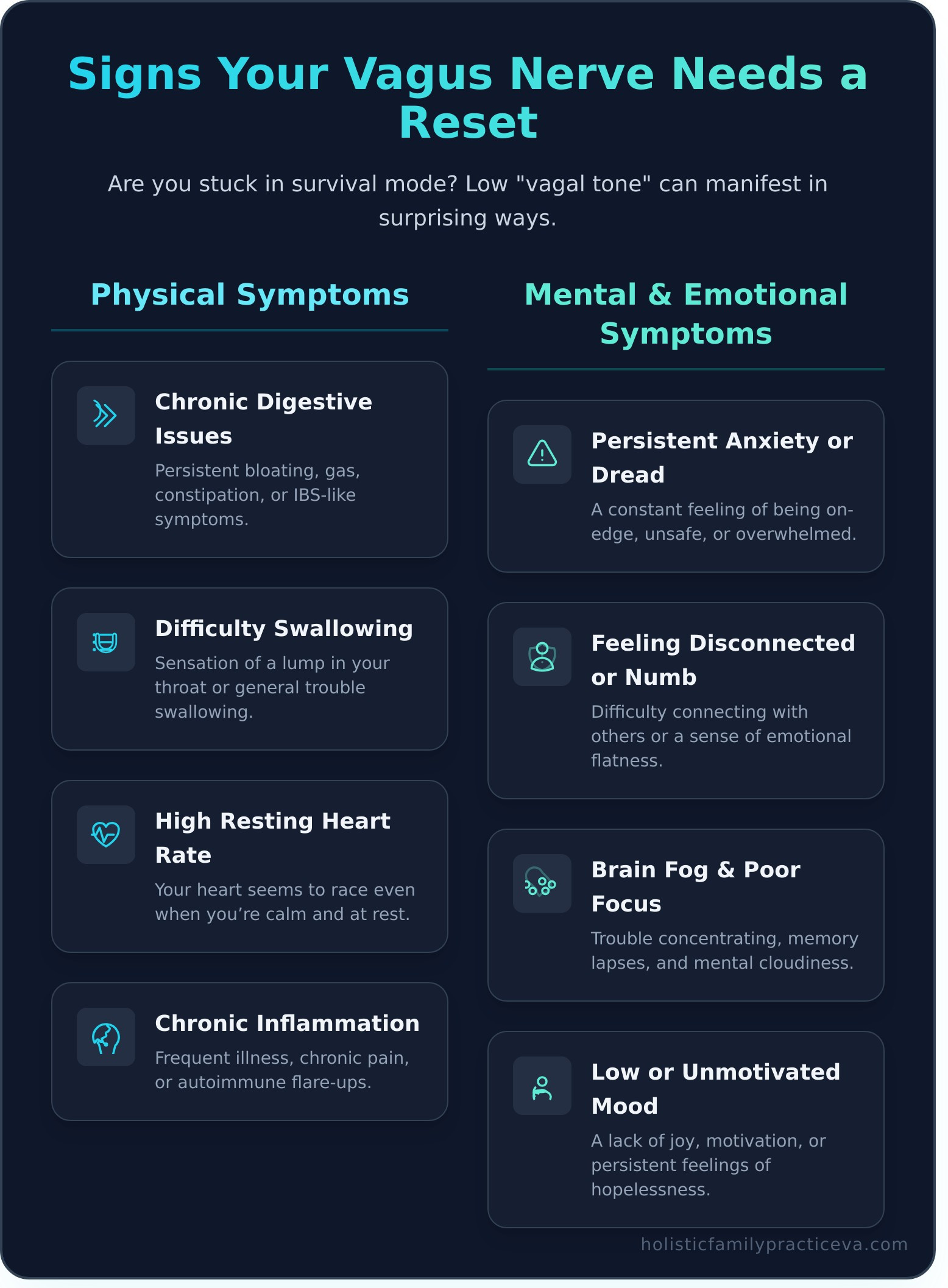
When your vagus nerve isn’t functioning optimally, your body’s ability to regulate core functions can be compromised. This can show up in ways that might seem unrelated, but are often connected to an underlying nervous system imbalance. Do any of these feel familiar?
- Chronic digestive issues: Persistent bloating, gas, constipation, or IBS-like symptoms can signal a weak gut-brain connection, which is managed by the vagus nerve.
- Unexplained aches and high inflammation: The vagus nerve is a master regulator of inflammation. Poor tone can lead to chronic pain, body aches, and a feeling of being constantly inflamed.
- Dizziness or a racing heart: If you feel lightheaded or your heart races when you stand up quickly, it could be a sign that your vagus nerve isn’t properly managing your heart rate and blood pressure.
- A hoarse voice or trouble swallowing: Since the vagus nerve innervates muscles in your throat and voice box, a weak or shaky voice and difficulty swallowing can be subtle indicators.
Mental and Emotional Indicators
Your nervous system state is deeply intertwined with your mental and emotional wellness. Poor vagal tone often means your body is stuck in a low-level “fight-or-flight” mode, making it difficult to feel safe, calm, and connected.
- Persistent anxiety or dread: A constant feeling of being ‘on edge,’ worried, or unable to relax is a classic sign that your sympathetic nervous system is in overdrive.
- Difficulty recovering from stress: Do you find that small stressors feel overwhelming or that it takes you a long time to calm down after a stressful event?
- Brain fog and poor concentration: When your body is focused on survival, higher-level cognitive functions like memory, focus, and clear thinking can suffer.
- A sense of disconnection: Feeling detached from your own body, your emotions, or the people around you can be a protective mechanism of a dysregulated nervous system.
Seeing yourself in these descriptions is not a cause for alarm-it is a moment of clarity. It means you are starting to understand the root of the problem. The beautiful truth is that your body has an incredible capacity to heal. By learning simple Vagus Nerve Reset Techniques: Simple Ways to Activate Your Body’s Relaxation Response, you can begin to gently guide your nervous system back to a state of balance. This isn’t about a quick fix, but about Building a Lifestyle for Lasting Vagal Tone through mindful, consistent care. You have the power to change your story.
5 Foundational Vagus Nerve Reset Techniques You Can Do Today
Ready to begin your journey toward a calmer nervous system? The beauty of these foundational vagus nerve reset techniques is their accessibility. You don’t need special equipment or a lot of time-just a willingness to connect with your body. We encourage you to start with one practice that feels intuitive and begin your path to mastering these Vagus Nerve Reset Techniques: Simple Ways to Activate Your Body’s Relaxation Response.
1. Conscious Breathing: The Master Key
Slow, diaphragmatic breathing is the most direct way to signal safety to your brain. When you intentionally lengthen your exhale, you activate the vagus nerve and your “rest and digest” system. Try this: Inhale through your nose for a count of 4, feeling your belly expand. Hold for 4. Then, exhale slowly through your mouth for a count of 6. Hold for 4. Repeat for just a few minutes to feel a shift.
2. Sound and Vibration: Humming, Chanting, and Gargling
Your vocal cords are directly connected to the vagus nerve, and creating vibration is a powerful way to stimulate it. This principle is at the core of many therapeutic approaches, and you can find a comprehensive overview of vagus nerve stimulation in scientific literature that explores its benefits. To try it yourself, simply hum a favorite tune, chant ‘Om’, or gargle vigorously with water for 30 seconds to feel the gentle, calming vibration.
3. Cold Exposure: A Quick System Shock
A splash of cold water on your face does more than wake you up-it triggers the ‘mammalian diving reflex,’ a primal response that slows your heart rate and activates the vagus nerve. For a quick reset, splash your face with cold water. For a more consistent practice, try ending your daily shower with 30 seconds of cold.
4. Gentle Neck Stretches and Self-Massage
Your vagus nerve travels down both sides of your neck. Gently releasing tension here can have a direct calming effect. Sit tall and slowly tilt your right ear toward your right shoulder, holding for 30 seconds while breathing deeply. Repeat on the left. You can also use your fingertips to gently massage down the sides of your neck, from behind your earlobes toward your collarbone.
5. Connection and Laughter: The Social Vagus
Your vagus nerve is deeply tied to your social engagement system. Feelings of safety, love, and connection strengthen your vagal tone. A heartfelt laugh or a warm hug can be one of the fastest ways to shift your nervous system into a state of ease. Call a supportive friend, watch a funny video, or hug a loved one-these moments are powerful medicine for your whole being.
Building a Lifestyle for Lasting Vagal Tone
While the quick exercises in this guide are powerful tools, the true path to a resilient nervous system lies in your daily habits. Think of this not as a checklist, but as a compassionate way to nourish your body’s innate capacity for calm. By consistently weaving supportive practices into your life, you are building a foundation of wellness that makes it easier to access your relaxation response when you need it most. It’s about consistency over intensity.
Nourishment from the Inside Out: Gut Health and Diet
Your gut and brain are in constant conversation through the vagus nerve-a connection known as the gut-brain axis. A happy gut microbiome sends calming signals to your brain. You can support this communication by focusing on an anti-inflammatory diet rich in:
- Omega-3 Fatty Acids: Found in salmon, walnuts, and flaxseeds.
- Fiber and Prebiotics: Abundant in leafy greens, onions, garlic, and whole grains.
- Probiotics: From fermented foods like yogurt, kefir, and kimchi.
Movement and Mindfulness Practices
Gentle, rhythmic movement like yoga, tai chi, or even a mindful walk helps release physical tension and improves heart rate variability-a key marker of good vagal tone. Pairing movement with mindfulness or meditation trains your nervous system to shift from “fight-or-flight” to “rest-and-digest” more efficiently. You are essentially teaching your body the path back to peace.
The Power of Social Connection and Laughter
Your nervous system is wired for connection. Positive social interactions-a hug, a meaningful conversation, or simply feeling understood-signal safety to your brain and stimulate the vagus nerve. Genuine laughter is one of the most effective and joyful Vagus Nerve Reset Techniques: Simple Ways to Activate Your Body’s Relaxation Response. It causes your diaphragm to contract, physically engaging this crucial nerve and sending a wave of calm through your body.
Integrating these pillars into your life creates a powerful synergy for long-term nervous system health. If you’re ready to explore a personalized approach to your wellness journey, we invite you to learn more about our holistic philosophy.
When to Seek Professional Guidance for Your Health Journey
Embracing your health journey is a powerful act of self-love, and learning how to regulate your nervous system is a beautiful place to start. The daily practices you’ve learned about are foundational for building resilience. However, sometimes self-care tools need to be paired with deeper, guided support. While Vagus Nerve Reset Techniques: Simple Ways to Activate Your Body’s Relaxation Response are incredibly effective, they work best when your body’s underlying systems are fully supported. Recognizing when to ask for help is not a sign of failure-it’s a sign of profound self-awareness.
Signs It’s Time to Partner with a Professional
If you feel like you’ve hit a plateau or that something deeper is at play, it may be time to seek personalized guidance. Your intuition is a powerful guide. Listen to it when it tells you that you need more support, especially if:
- Your symptoms of stress, digestive upset, or anxiety are chronic, severe, or worsening despite your best efforts.
- You feel overwhelmed by conflicting health information and are unsure where to even begin your wellness journey.
- You suspect underlying issues like a hormone imbalance, nutrient deficiencies, or chronic inflammation are holding you back.
How a Holistic Approach Can Help
A holistic or functional medicine practitioner partners with you to look at the whole you-mind, body, and soul. Instead of just managing symptoms, our goal is to uncover and address the root cause of what you’re experiencing. We move beyond guesswork by using advanced lab testing to get a clear picture of your unique physiology. This allows us to “know your numbers” and understand exactly what your body needs.
From there, we co-create a personalized roadmap that integrates nutrition, lifestyle adjustments, and targeted support to restore balance from the inside out. This kind of comprehensive plan can amplify the benefits of the Vagus Nerve Reset Techniques: Simple Ways to Activate Your Body’s Relaxation Response and empower you to achieve lasting wellness. You don’t have to navigate this journey alone.
Ready to take the next step? Let’s explore your health together.
Embrace Your Inner Calm: Your Journey to a Balanced Nervous System
Understanding your vagus nerve is the first step toward reclaiming your body’s natural state of calm. As we’ve explored, your nervous system has a powerful, built-in reset button, and simple, daily practices can make a profound difference in your resilience to stress. By consistently practicing these Vagus Nerve Reset Techniques: Simple Ways to Activate Your Body’s Relaxation Response, you are actively building a foundation for lasting wellness and emotional balance. But what if your symptoms feel more complex? Sometimes, the journey to wellness requires a compassionate guide to help you uncover the root cause of imbalance.
At Holistic Family Practice, our patient-centered functional medicine approach, led by the compassionate Dr. Erica Steele, ND, is designed to do just that. We partner with you to look at the whole you and identify the true source of your symptoms. Empower your health journey. Book a discovery call to understand the root cause of your symptoms.
You have the power to heal and thrive. Your path to a more peaceful, balanced life is within reach.
Frequently Asked Questions About Your Vagus Nerve
How long does it take to improve vagal tone and see results?
Your health journey is unique, and so is your timeline. While you may feel an immediate sense of calm from a single deep breathing exercise, building resilient vagal tone is a practice of consistency. Most people begin to notice a more profound sense of balance and a quicker recovery from stress within a few weeks of daily practice. Be patient and compassionate with yourself; every small step nurtures your body’s foundation for wellness.
Is it possible to overstimulate the vagus nerve with these exercises?
This is a wonderful question that shows you’re listening intuitively to your body. For the gentle exercises we recommend, like mindful breathing or humming, it is nearly impossible to cause overstimulation. These are natural signals of safety. The most important guide is your own comfort. If anything ever feels unpleasant, simply pause and return to a gentle breath. Your body has an innate wisdom, and our goal is to help you hear it more clearly.
What is the single most effective technique for immediate stress relief?
For a powerful and immediate sense of calm, we always turn to slow, diaphragmatic breathing. This is one of the most direct vagus nerve reset techniques because it physically signals to your brain that you are safe. Try this: inhale deeply into your belly for a count of four, and then exhale slowly for a count of six. This longer exhale is key to activating your body’s relaxation response, offering a peaceful anchor in any moment of stress.
How does sleep quality impact the health of my vagus nerve?
Sleep and your vagus nerve are deeply intertwined partners in your well-being. During deep, restorative sleep, your body is in a prime parasympathetic “rest and digest” state, which naturally tones and strengthens the vagus nerve. Conversely, poor sleep can weaken vagal tone, leaving you feeling more stressed and reactive. Prioritizing consistent, quality sleep is a foundational act of care for your entire nervous system, helping you feel more grounded and resilient during your waking hours.
Can certain supplements help improve vagal tone?
Nutrition is a cornerstone of nervous system health, and certain supplements like probiotics (for the gut-brain axis), omega-3 fatty acids, and magnesium can be wonderfully supportive. However, your body’s needs are unique. We always recommend partnering with a knowledgeable practitioner to understand what’s right for you before beginning any new regimen. This ensures you’re making the most empowered and effective choices for your personal health journey and getting to the root of the problem.
What is the Polyvagal Theory and how does it relate to these techniques?
The Polyvagal Theory offers an empowering map for understanding your nervous system. It suggests we have three main states: a safe and social state (ventral vagal), a mobilized fight-or-flight state (sympathetic), and a shutdown or freeze state (dorsal vagal). The vagus nerve reset techniques you’re learning are powerful tools that help you consciously guide your nervous system out of a stress or shutdown state and back into that beautiful feeling of safety, connection, and calm.