Interest in holistic wellness is soaring, and 2026 is shaping up to be a landmark year for those considering careers in natural health. As more individuals seek whole-person care, the spotlight turns to the education and training provided by top naturopathic colleges.
This article highlights seven outstanding institutions that are redefining what it means to learn and practice naturopathic medicine. You will discover each college’s unique strengths, innovative programs, supportive student experience, and career outcomes.
Ready to take the next step? Explore these leading naturopathic colleges to shape your future in holistic healthcare.
What Makes a Naturopathic College Outstanding?
Choosing among top naturopathic colleges requires a clear understanding of what sets an institution apart. From accreditation and curriculum to faculty and campus culture, each element plays a vital role in shaping future practitioners. Let's explore the essential qualities that define outstanding naturopathic colleges.
Accreditation and Regulatory Standards
Accreditation is the foundation of legitimacy for all naturopathic colleges. Programs accredited by the Council on Naturopathic Medical Education (CNME) or an equivalent body ensure students are eligible for licensure and recognized board exams. This regulatory oversight protects educational quality and public safety.
Graduates from accredited naturopathic colleges can pursue professional practice with confidence. For more details on the process and standards, see the CNME accreditation standards. Without proper accreditation, students may face barriers to licensure and employment.
Accreditation also signals a college's commitment to ongoing evaluation and improvement, which benefits both students and the profession.
Curriculum Depth and Innovation
The curriculum in leading naturopathic colleges spans botanical medicine, nutrition, homeopathy, physical medicine, and clinical sciences. Programs balance evidence-based approaches with traditional healing methods, preparing students for modern integrative care.
Innovative coursework often includes emerging topics such as functional medicine or global health perspectives. This ensures graduates are well equipped for evolving healthcare demands.
Comprehensive training in both theory and practice is a hallmark of outstanding naturopathic colleges, setting them apart from less rigorous institutions.
Clinical Training and Real-World Experience
Clinical experience is at the heart of exceptional naturopathic colleges. Students participate in supervised rotations, community clinics, and externships, gaining hands-on patient care skills.
Opportunities often include serving diverse populations and collaborating with professionals from other health disciplines. This real-world exposure is crucial for building clinical confidence.
Robust clinical training ensures graduates are prepared to transition smoothly into practice, enhancing their effectiveness and employability.
Faculty Expertise and Research Opportunities
Faculty at top naturopathic colleges bring expertise from diverse backgrounds, including research, clinical practice, and public health. Their mentorship shapes student learning and nurtures future leaders.
Access to active research projects allows students to contribute to the advancement of naturopathic medicine. Engaging with faculty on evidence-based initiatives helps students develop critical thinking skills.
Outstanding naturopathic colleges prioritize faculty development and research, making them attractive to aspiring practitioners.
Campus Culture and Student Support
A supportive campus environment is essential in naturopathic colleges. Inclusive cultures foster both personal and professional growth, while promoting student wellness.
Resources such as peer groups, mental health services, and wellness programs help students maintain balance throughout their studies. Vibrant student life encourages networking and collaboration.
Colleges that invest in student support create a foundation for lifelong success in the naturopathic field.
Graduate Success and Career Pathways
Outstanding naturopathic colleges boast high board exam pass rates and diverse career placements. Graduates find opportunities in clinical practice, academia, research, and wellness consulting.
Strong alumni networks and continuing education options support ongoing professional development. Career counseling and mentorship help students navigate the transition from education to employment.
These outcomes underscore the long-term value of choosing the right naturopathic college.
Global Perspective and Community Impact
A global outlook is central to many leading naturopathic colleges. Programs often emphasize service to underserved communities and involvement in public health initiatives.
This commitment to broader wellness goals prepares graduates to make a meaningful impact locally and internationally.
Colleges with a strong community focus inspire students to become advocates for holistic health worldwide.
7 Outstanding Naturopathic Colleges to Explore in 2026
Exploring the best naturopathic colleges is a crucial step for anyone aspiring to shape the future of holistic healthcare. These institutions set the standard for comprehensive education, clinical training, and innovative research. If you are new to the field, you may want to review a Naturopathic education overview to understand the core components and expectations before diving into your options.
Below, we examine seven exceptional naturopathic colleges, each recognized for unique strengths, diverse programs, and robust student outcomes. Whether you seek integrative approaches, research opportunities, or global perspectives, these colleges are redefining what it means to be a leader in natural medicine.
1. National University of Natural Medicine (NUNM)
The National University of Natural Medicine (NUNM), located in Portland, Oregon, stands as the oldest accredited institution among naturopathic colleges in North America. With a tuition estimate of $42,000 per year in 2026, NUNM attracts students seeking a rigorous and integrative approach to natural medicine.

NUNM’s ND program is renowned for its combination of evidence-based and traditional healing modalities. Students can pursue dual degrees, such as ND/MSOM (Master of Science in Oriental Medicine) or ND/MScN (Master of Science in Nutrition), broadening their expertise and career options.
One of NUNM’s unique selling points is its strong commitment to research and global health. The university operates several community clinics throughout Portland, giving students hands-on experience serving diverse populations. Global health immersion programs further allow students to gain practical knowledge in different cultural contexts, which is increasingly valuable in today’s interconnected world.
The urban campus environment is vibrant and supportive, with a focus on wellness and personal development. NUNM’s faculty are leaders in the field, and the college’s research centers are at the forefront of innovation in naturopathic medicine.
Pros:
- Established reputation among naturopathic colleges
- Active research initiatives and community outreach
- Flexible dual degree programs
Cons:
- Higher tuition compared to some peers
- Admissions are highly competitive
For those passionate about blending tradition and innovation, NUNM provides a robust foundation for a successful career in holistic health.
2. Bastyr University
Bastyr University is a pioneer among naturopathic colleges, with campuses in Seattle, Washington, and San Diego, California. Tuition for 2026 is estimated at $39,000 per year, reflecting the institution’s premium learning environment and resources.
Bastyr is celebrated for its science-based approach to natural medicine. The university’s extensive botanical gardens serve as living laboratories, supporting hands-on education in plant-based healing. Students benefit from an on-site teaching clinic and access to advanced research centers, fostering a culture of inquiry and evidence-based practice.
Interdisciplinary programs are a hallmark of Bastyr, enabling students to engage with a variety of health disciplines. The campus life is vibrant, with an active student body and numerous opportunities for extracurricular involvement. A strong alumni network supports graduates as they transition into their careers, providing mentorship and professional connections.
Pros:
- Renowned faculty and research opportunities
- Diverse degree programs within naturopathic colleges
- Desirable West Coast campus locations
Cons:
- Higher cost of living in Seattle and San Diego
- Academic workload can be demanding
Bastyr is ideal for students who value scientific rigor and wish to immerse themselves in a dynamic, research-driven environment.
3. Canadian College of Naturopathic Medicine (CCNM)
The Canadian College of Naturopathic Medicine (CCNM) is Canada’s largest institution dedicated to naturopathic colleges, with campuses in Toronto and Vancouver. Tuition is approximately $26,000 CAD per year for 2026, making it an accessible option for Canadian students.

CCNM’s core features include integrative teaching clinics, robust research partnerships, and a curriculum that addresses social determinants of health. The college’s focus on community engagement ensures students are prepared to address a wide range of patient needs within diverse populations.
Unique to CCNM is its emphasis on integrating conventional and complementary approaches, providing a holistic view of patient care. The clinical externship program offers extensive real-world training, and students benefit from two distinct campus experiences—urban Toronto or scenic Vancouver.
Pros:
- Two campus locations for varied learning environments
- Active involvement in research and community health
- Lower tuition for Canadian residents
Cons:
- Limited pathways for U.S. licensure compared to some other naturopathic colleges
- Admissions process is competitive
CCNM appeals to students seeking a comprehensive, community-focused education with global relevance in the field of naturopathic medicine.
4. Southwest College of Naturopathic Medicine & Health Sciences (Sonoran University)
Sonoran University, formerly known as Southwest College of Naturopathic Medicine, is a leader among naturopathic colleges for its innovative curriculum and entrepreneurial spirit. Located in Phoenix, Arizona, tuition is estimated at $37,000 per year for 2026.

Sonoran University offers a robust ND program with state-of-the-art facilities, including a modern medical center that provides students with diverse clinical experiences. The curriculum emphasizes integrative health, entrepreneurship, and leadership, preparing graduates to excel in both clinical and business settings.
Students have access to a variety of community outreach programs, supporting underserved populations in the Phoenix area. The university also fosters innovation through business incubation resources, encouraging students to develop new models of care and wellness.
Pros:
- Modern campus and clinical facilities
- Strong focus on business and leadership within naturopathic colleges
- Dynamic community outreach initiatives
Cons:
- Hot desert climate may not suit all students
- Tuition costs are on the higher side
Sonoran University is an excellent choice for those interested in combining clinical expertise with entrepreneurial ambition in the evolving landscape of natural medicine.
5. National University of Health Sciences (NUHS)
National University of Health Sciences (NUHS), located near Chicago, Illinois, integrates its ND program within a multi-disciplinary health sciences university. Tuition is estimated at $33,000 per year for 2026, positioning it competitively among naturopathic colleges.
NUHS stands out for its interprofessional education model, where students learn alongside peers from chiropractic, acupuncture, and biomedical programs. This approach fosters collaboration and prepares graduates for integrative practice environments.
The urban campus offers broad clinical exposure, with partnerships across the Chicago area. Flexible academic pathways allow students to tailor their education to personal interests, whether in clinical care, research, or interdisciplinary study.
Pros:
- Diverse degree options and interprofessional focus
- Strong clinical training and urban clinical partnerships
- Midwest location with access to a large healthcare network
Cons:
- Smaller ND cohort compared to other naturopathic colleges
- Urban cost of living can be a consideration
NUHS is ideal for students who value collaborative learning and wish to gain a broad perspective on health sciences.
6. University of Bridgeport School of Naturopathic Medicine
The University of Bridgeport School of Naturopathic Medicine offers the only ND program in the Northeast United States, with tuition estimated at $30,000 per year for 2026. This school is a unique presence among naturopathic colleges in the region.
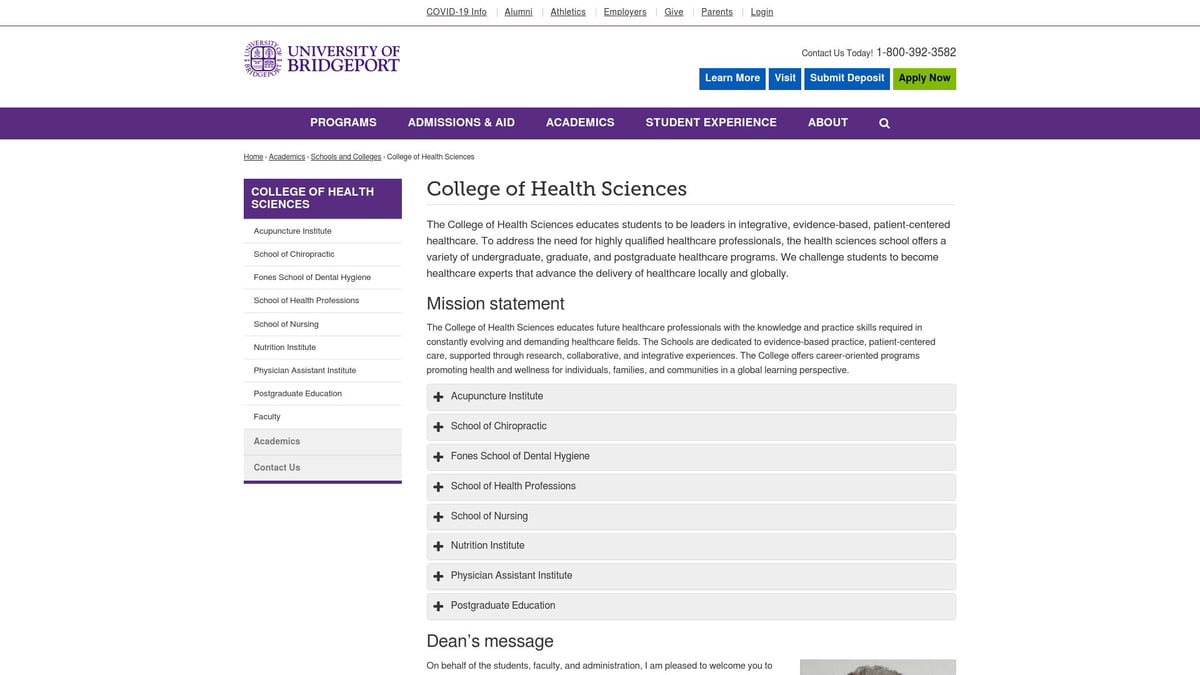
Bridgeport’s integrative health focus is supported by an interdisciplinary faculty and a curriculum that emphasizes nutrition and functional medicine. Students benefit from clinical partnerships in Connecticut and the surrounding area, providing valuable real-world experience.
The campus, situated along the Connecticut coast, offers a supportive and personalized educational environment. With a smaller program size, students enjoy individualized attention and strong mentorship from faculty members.
Pros:
- Lower tuition compared to many other naturopathic colleges
- Integrative curriculum with a focus on nutrition
- Regional access for students in the Northeast
Cons:
- Smaller program size may limit some extracurricular opportunities
- Campus amenities are more limited than at larger schools
Bridgeport is an excellent fit for students seeking a close-knit academic community with a strong focus on integrative and functional medicine.
7. National Institute of Naturopathy – Maharashtra University of Health Sciences (India)
The National Institute of Naturopathy, part of Maharashtra University of Health Sciences in India, is a premier institution for students interested in traditional and integrative health sciences. Tuition is highly affordable, estimated at $3,000 per year for 2026, though it may vary for international students.
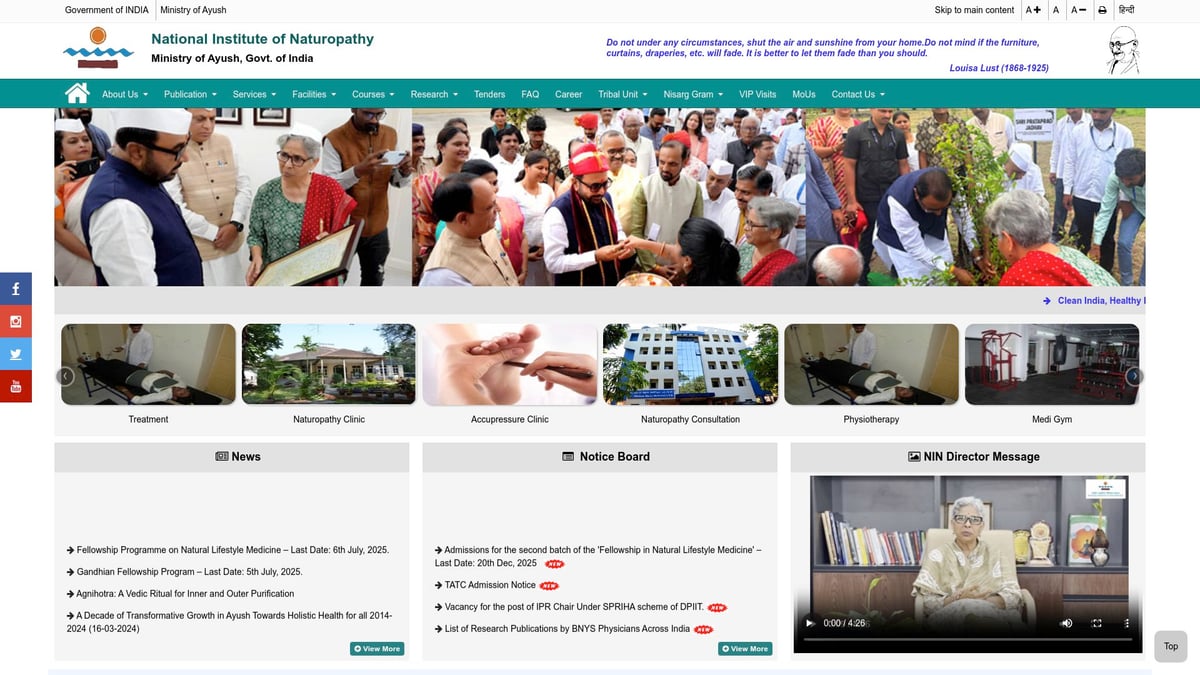
This institution offers both Bachelor’s and Master’s degrees in Naturopathy & Yogic Sciences, integrating Ayurveda, yoga, and naturopathy into its curriculum. The diverse, global student body benefits from cultural immersion and exposure to a wide range of wellness modalities.
The National Institute of Naturopathy is ideal for those seeking a holistic and culturally rich educational experience. It is especially attractive for international students interested in exploring traditional Indian systems of medicine within the broader context of naturopathic colleges.
Pros:
- Unique curriculum blending Ayurveda, yoga, and naturopathy
- Global alumni network and affordable tuition
- Rich cultural and educational immersion
Cons:
- Distance and travel for North American students
- Different licensure pathways than North American naturopathic colleges
Students who value global health, tradition, and affordability will find this institution an exceptional place to launch their holistic health careers.
How to Choose the Right Naturopathic College for You
Choosing among naturopathic colleges is a pivotal step for your future in holistic healthcare. With so many unique programs and locations, finding the right fit can feel overwhelming. By focusing on accreditation, curriculum, clinical training, student support, finances, and career outcomes, you can make an informed decision that aligns with your aspirations.
Assessing Accreditation and Licensure Outcomes
Start by verifying that your chosen program is accredited by the Council on Naturopathic Medical Education (CNME) or its international equivalent. Accreditation ensures that graduates from naturopathic colleges are eligible for licensure and board exams. For more details on licensure requirements and processes, consult the Naturopathic licensure FAQs.
Evaluating Curriculum and Specialization Opportunities
Compare the core coursework and elective options offered by different naturopathic colleges. Look for programs that provide depth in botanical medicine, nutrition, research, or global health. Consider whether dual degree pathways or unique concentrations match your career goals. Review each curriculum's integration of evidence-based and traditional healing methods.
Clinical Training and Community Engagement
Investigate the clinical training models at each institution. Strong naturopathic colleges offer supervised rotations in teaching clinics, community health centers, and externship placements. Prioritize schools where you will gain direct patient care experience and opportunities to serve diverse populations. Real-world engagement is key for developing clinical competence.
Campus Life, Location, and Student Support
Assess the campus culture and geographic setting of each college. Some naturopathic colleges provide vibrant urban experiences, while others offer quieter, nature-focused environments. Explore student wellness resources, mental health support, and peer networks. Consider how location influences your quality of life and professional connections.
Financial Considerations and Scholarships
Review tuition, cost of living, and available scholarships or financial aid. Some naturopathic colleges offer research assistantships or part-time work for students. Compare financial support options to ensure your education is both high-quality and sustainable. Careful budgeting will help you minimize debt and maximize opportunities.
Alumni Outcomes and Career Support
Research the career outcomes of each program's graduates. High board exam pass rates and strong job placement statistics reflect well on naturopathic colleges. Alumni networks and mentorship programs are vital for career growth. For valuable resources on professional development after graduation, visit Education and Professional Development.
The Future of Naturopathic Education: Trends to Watch in 2026
Naturopathic colleges are entering a dynamic era in 2026, where innovation and adaptability are essential. As the healthcare landscape evolves, these institutions are leading the way by embracing new tools and philosophies to prepare students for future challenges.
Digital Transformation and Hybrid Learning
The integration of telemedicine and digital health platforms is now central to naturopathic colleges. Curricula increasingly feature virtual case studies, remote patient consultations, and online resources. Many institutions are also expanding naturopathic education online programs, offering flexible hybrid models that make holistic medical education accessible to a wider audience.
Micro-credentials and modular learning are on the rise, giving students the chance to specialize in areas such as integrative nutrition or digital wellness. This evolution supports both traditional learners and those seeking continuing education.
Global Partnerships and Inclusive Practice
Naturopathic colleges are building global partnerships, enabling cross-cultural exchanges and expanded clinical training. Students benefit from international internships and collaborative research, enhancing their understanding of diverse health systems.
A growing emphasis on cultural competency and decolonized education ensures graduates are well-equipped to serve diverse communities. Many schools now include global wellness initiatives and community engagement as core aspects of their mission.
Evidence-Based Focus and Interprofessional Collaboration
Research and evidence-based practice remain foundational in leading naturopathic colleges. Programs now integrate the latest scientific findings with traditional healing, preparing graduates for a complex healthcare environment.
There is also a strong move toward interprofessional collaboration. Students learn alongside peers from other health disciplines, fostering teamwork and holistic problem-solving. This approach is highlighted in recent integrative health trends and prepares future practitioners for advocacy in holistic care settings.
As these trends take shape, students can expect a future where naturopathic colleges are at the forefront of healthcare transformation, blending technology, inclusivity, and research-driven education.
As you consider which naturopathic college best fits your dreams and values, remember that the journey into holistic medicine is about both personal transformation and professional growth. If you’re curious to explore the roots of holistic health or want to experience the blend of science and tradition firsthand, I invite you to take the next step. Begin your journey with a free introduction to holistic medicine, designed for curious minds and future changemakers. You can get started today with Intro to Holistic Medicine I and discover how education can empower your path in integrative healthcare.