Do you live with chronic pain, fatigue, or a persistent sense of anxiety that seems to have no clear cause? Perhaps you feel disconnected from your own body, as if it’s a stranger keeping score of past hurts. If you’ve found that talk therapy alone isn’t enough to soothe these physical symptoms, you are not alone, and your intuition is guiding you toward a deeper truth. Understanding how to release trauma from the body: holistic tools for healing and recovery is a vital step on the journey to reclaiming your well-being and feeling truly at home within yourself.
This guide was created with deep compassion to empower you on your path. Here, we will gently explore why your body holds onto stress and provide you with simple, effective tools to safely calm your nervous system. You will discover practical, body-based techniques you can use daily to reconnect with your body’s innate wisdom, find relief from unexplained symptoms, and cultivate a lasting sense of safety and peace. Your healing journey toward feeling whole again starts right here.
Understanding How Your Body ‘Keeps the Score’ of Trauma
Your healing journey begins with a compassionate understanding of what trauma truly is. It’s not the overwhelming event you experienced, but rather the response that became locked in your body when you couldn’t fully process the threat. Your body, in its infinite wisdom, stored that intense survival energy, creating what is known as somatic memory. This concept-that the body holds the memory of trauma-is the foundation for powerful healing modalities like Somatic Experiencing, which helps complete those interrupted biological responses.
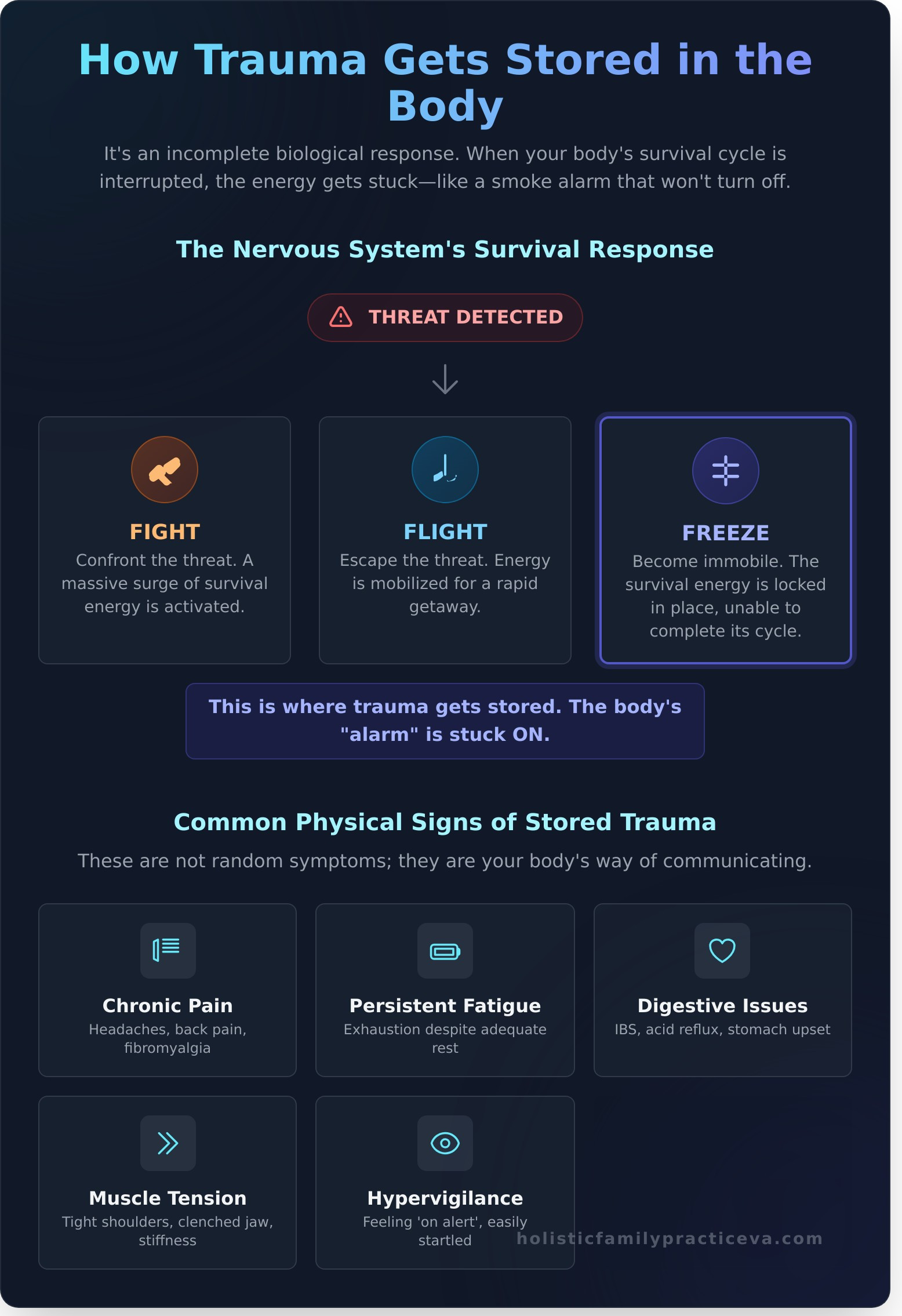
When faced with a threat, your body instantly activates one of its brilliant survival strategies: fight, flight, freeze, or even fawn (appeasing the threat). It’s crucial to recognize these are not conscious choices or personal failings; they are intelligent, automatic nervous system responses designed to keep you safe. The challenge arises when that survival energy has nowhere to go, leaving your internal systems on high alert long after the danger has passed.
Your Nervous System: The Body’s Alarm System
Think of your Autonomic Nervous System (ANS) as your body’s internal surveillance team. It has two primary branches: the sympathetic (the gas pedal that revs you up for action) and the parasympathetic (the brake pedal that helps you rest and digest). Polyvagal Theory further illuminates this, showing we can shift between states of safety, danger (fight/flight), and life-threat (freeze). Trauma can get this system stuck, like a smoke detector that won’t turn off, constantly signaling danger even when you are safe.
Common Physical Signs of Stored Trauma
When your nervous system is chronically dysregulated, it speaks to you through physical symptoms. If you experience any of the following, please know that these feelings are real and deeply connected to your past experiences. They are your body’s way of asking for help. Recognizing them is the first empowering step in understanding how to release trauma from the body: holistic tools for healing and recovery.
- Chronic pain in the back, neck, or joints without a clear medical cause.
- Persistent digestive issues like IBS, acid reflux, or food sensitivities.
- Unexplained headaches, migraines, and chronic fatigue.
- Noticeable muscle tension patterns, such as a clenched jaw, tight shoulders, or a braced core.
- Hypervigilance (feeling constantly on edge) and an exaggerated startle response.
Foundational Practices: Creating a Sense of Safety First
Before we can even think about release, we must first build a foundation of safety. This is the non-negotiable first step on your healing journey. When trauma is stored in the body, the nervous system often remains stuck in a state of high alert, constantly scanning for threats. The goal of these foundational practices is to gently signal to your body and mind that the danger has passed and you are safe right now. Think of these not as tasks to perfect, but as resources you can return to anytime you feel overwhelmed. Approach them with curiosity and deep self-compassion. This is the essential groundwork for learning how to release trauma from the body: holistic tools for healing and recovery.
Gentle Grounding Techniques to Anchor in the Present
Grounding pulls your focus away from internal distress and into the tangible, external world. It’s a powerful way to interrupt a cycle of overwhelming thoughts or feelings. Start by feeling your feet firmly on the floor, noticing the support of the earth beneath you. You can also try holding a comforting object, like a smooth stone or soft blanket, and focus entirely on its texture, weight, and temperature. For a structured practice, try the 5-4-3-2-1 method:
- 5: Acknowledge FIVE things you see around you.
- 4: Acknowledge FOUR things you can touch.
- 3: Acknowledge THREE things you can hear.
- 2: Acknowledge TWO things you can smell.
- 1: Acknowledge ONE thing you can taste.
Mindful Breathing for a Calm Nervous System
Your breath is a direct line to your nervous system. By consciously slowing your breath, you can activate the parasympathetic nervous system-your body’s natural “rest and digest” state. Try a simple box breathing technique: inhale for a count of four, hold for four, exhale for four, and hold for four. Or, simply focus on making your exhale slightly longer than your inhale. The key is ease; never force the breath. If focusing on your breath feels activating (which it can for some), simply let it go and return to a grounding or orienting practice instead.
Sensory Awareness and Orienting
Orienting is the instinctive way our bodies determine if we are safe. It involves slowly and intentionally letting your eyes scan your surroundings. Allow your head and neck to turn naturally as you look around the room. Let your gaze land on things that seem neutral or even pleasant-a plant, a piece of art, the color of a wall. This practice, a cornerstone of body-based therapies highlighted in Somatic Experiencing research, reminds your brain that you are in a safe place, right here and now. You can also expand this to other senses, noticing distant sounds or the feeling of the air on your skin. This is a vital part of the toolkit for how to release trauma from the body: holistic tools for healing and recovery.
Active Somatic Release Techniques to Gently Unwind Tension
After creating a foundation of safety, we can begin to invite the body to speak. The following active techniques are gentle invitations for your body to complete the survival responses that may have become “stuck” during a traumatic event. The key here is titration-working in small, manageable doses that feel safe and accessible to your nervous system.
Remember, you are in control of your healing journey. Listen to your body’s wisdom; if anything feels too intense, gently pause and return to a grounding technique. The goal is not a dramatic catharsis but a gentle, sustainable release of stored tension. This approach is fundamental to learning How to Release Trauma from the Body: Holistic Tools for Healing and Recovery.
Therapeutic Shaking and Tremoring
Have you ever seen an animal shake after a scare? This is the nervous system’s natural way of discharging stress hormones and returning to balance. You can access this innate healing mechanism by gently inducing tremors. Try a simple wall sit, holding the position just until your legs begin to tremble. Allow the sensation without judgment for just a minute or two, then stand up and notice the sense of calm that follows.
Somatic Stretching and Unwinding
This practice is less about athletic flexibility and more about deep, internal listening. Unlike a typical stretch, somatic unwinding is intuitive. Find a comfortable space and begin to move in any way that feels good to you. Let your body lead. You might notice an urge to slowly roll your shoulders, gently rock your hips, or yawn widely to release your jaw. As you move, notice any emotions that arise, simply allowing them to be present as you stretch.
Using Your Voice: Sound and Toning
Trauma can literally leave us speechless, creating a feeling of being choked up or silenced. Reclaiming your voice is a powerful step in healing. You don’t need to sing; simply making sound can be profoundly regulating. Try taking a deep breath and letting out a long, audible sigh or a gentle hum. Feel the vibration in your chest and throat. This vibration is a direct signal of safety to your vagus nerve, helping to soothe your entire system and reclaim your power of expression.
Holistic Lifestyle Support for Lasting Nervous System Regulation
True healing is not a one-time event; it’s a gentle, ongoing conversation with your body. As you explore how to release trauma from the body, holistic tools for healing and recovery become woven into the fabric of your daily life. Your choices-from the food you eat to the way you rest-can either create a safe harbor for your nervous system or add to its strain. The beautiful part of this journey is that it’s about adding nourishment, not restriction. You are empowered to create an environment where your mind, body, and soul can truly thrive.
Nourishing Your Nerves: The Role of Food and Hydration
What you eat directly communicates with your nervous system. Keeping your blood sugar stable with regular, balanced meals helps prevent the energy crashes that can trigger anxiety or irritability. Focus on incorporating warm, grounding foods that are easy to digest, like soups, stews, and roasted root vegetables. Consider adding these key nutrients:
- Magnesium: Found in leafy greens, nuts, and seeds to help calm the nervous system.
- B Vitamins: Abundant in whole grains, eggs, and lean meats, they support brain health and energy.
- Omega-3s: Present in fatty fish and flaxseeds to reduce inflammation and support cognitive function.
End your day with a warm, comforting cup of herbal tea. Chamomile, lavender, and passionflower are wonderful allies for inviting calm and tranquility.
The Healing Power of Rest, Sleep, and Nature
Deep, restorative sleep is non-negotiable for trauma recovery. It’s during these quiet hours that your brain processes memories and emotions, clearing the way for healing. To improve your sleep quality, create a simple, calming bedtime routine: dim the lights, turn off screens an hour before bed, and perhaps read a few pages of a book. Nature also offers a profound sense of regulation. Spending time outdoors allows your nervous system to “co-regulate” with the steady, grounding rhythm of the natural world. You don’t need a grand adventure; simply step outside and listen to the birdsong, feel the sun on your skin, or walk barefoot on the grass for a few moments. These small acts create powerful signals of safety for your body. If you’re seeking personalized guidance on building these supportive habits, we’re here to empower your health journey.
Integrating Mind and Body: When to Seek Professional Guidance
Your healing journey is deeply personal, and the self-guided practices in this article are powerful first steps. However, it’s essential to honor that self-help has its limits. When trauma is deep-seated or complex, navigating it alone can feel overwhelming. Seeking the guidance of a skilled practitioner is a profound act of self-care and a vital part of learning How to Release Trauma from the Body: Holistic Tools for Healing and Recovery.
A trauma-informed professional provides a safe, supportive container where you can process difficult emotions and physical sensations without becoming re-traumatized. They act as a compassionate guide, helping your nervous system find its way back to a state of balance and safety.
Types of Body-Based (Somatic) Therapies
Somatic therapies are designed to work with your body’s innate wisdom, not against it. Instead of focusing only on the story of what happened, these modalities help you gently process the physical sensations where trauma is stored. They empower you to build the capacity to handle discomfort and allow your nervous system to complete its natural healing cycles.
- Somatic Experiencing (SE): Focuses on slowly releasing traumatic shock by guiding your attention to internal physical sensations (interoception) in a way that feels manageable.
- Sensorimotor Psychotherapy: Blends talk therapy with body-centered techniques to address how trauma impacts your posture, movement, and nervous system responses.
- EMDR (Eye Movement Desensitization and Reprocessing): Uses bilateral stimulation (like eye movements) to help your brain reprocess and integrate traumatic memories that feel “stuck.”
How Functional Medicine Supports Trauma Recovery
Chronic stress from unresolved trauma creates real, measurable imbalances in your body. Functional medicine helps uncover the biological impact of your experiences by looking at the whole you. By exploring the root causes of symptoms like fatigue, brain fog, and digestive issues, we can create a personalized roadmap to support your physical recovery and make emotional healing feel more accessible.
We use targeted testing to assess cortisol patterns, identify nutrient deficiencies that impact mood, and measure inflammation markers. Based on these insights, a plan with nutritional, supplemental, and lifestyle support can help restore balance to your body. Book a discovery call to learn how we can support your healing journey.
Embrace Your Path to Embodied Healing
Your body holds profound wisdom, and learning to listen to it is the first step toward releasing what no longer serves you. Remember that healing begins with creating a deep sense of internal safety, allowing you to gently unwind tension through somatic practices and holistic lifestyle support. This guide on how to release trauma from the body: holistic tools for healing and recovery is a powerful starting point, but you don’t have to walk this path alone.
If you feel called to explore this work more deeply, we invite you to take the next step. At Holistic Family Practice, we believe in a partnership approach that empowers you on your health journey. Led by a compassionate, board-certified Naturopathic Doctor, our focus is on uncovering the root cause of your symptoms for lasting wellness. Ready to take the next step? Book a discovery call to create a personalized, holistic plan for your healing journey.
Remember, your body has an incredible capacity to heal. Be patient and gentle with yourself-you are worthy of this journey toward wholeness.
Frequently Asked Questions About Releasing Trauma
How long does it take to release trauma from the body?
Your healing journey is uniquely yours, and there is no set timeline. Releasing trauma is not a linear process with a finish line, but a gradual unfolding of safety and resilience within your body. Be patient and compassionate with yourself. The goal is not speed, but gentle, sustainable integration. Celebrate small shifts and trust your body’s innate wisdom to heal at its own pace. This is about honoring your personal rhythm of recovery.
Is it possible to feel worse before I feel better?
Yes, this is a very common and valid part of the process. As you begin to release stored energy, you might temporarily experience heightened emotions, fatigue, or sensitivity. Think of it as a thaw; feelings that were frozen are now beginning to move. This is a sign that your body is actively processing and reorganizing. Acknowledge these feelings with compassion, knowing they are a sign of deep healing in motion and a step on your wellness journey.
What should I do if I feel overwhelmed while trying these exercises?
If you feel overwhelmed, the most empowering thing you can do is pause. Your body is communicating its limit, and honoring that is a profound act of self-care. Gently bring your attention to your breath or the feeling of your feet on the floor. These grounding techniques help regulate your nervous system. Remember, you are in control of your healing journey. You can always stop and return to an exercise when you feel more resourced and ready.
Can releasing trauma cause physical pain or flu-like symptoms?
It can. As your nervous system discharges long-held stress, you may experience temporary physical sensations like muscle aches, fatigue, or even flu-like symptoms. This is often part of a somatic release. It’s a sign that your body is recalibrating and letting go of old patterns. When learning how to release trauma from the body, remember to support this process with plenty of rest, hydration, and gentle self-compassion as your system finds a new balance.
Is it safe to do these trauma release exercises on my own?
Many gentle, grounding exercises can be safely explored on your own to build self-awareness. However, for deeper trauma work, we strongly encourage partnering with a trauma-informed practitioner. A trained guide provides a safe, supportive container for your experience, helping you navigate intense emotions and sensations without becoming re-traumatized. This partnership ensures your healing journey is both empowering and secure, honoring the needs of your mind, body, and soul.
How is this different from just talking about my trauma in therapy?
Talk therapy is a powerful tool for processing the cognitive and emotional story of your trauma. Somatic, or body-based, work is its essential partner. Trauma is stored not just in our memories, but as tension and dysregulation in our nervous system. Body-based practices directly address this physical imprint, helping to complete stored survival responses. Combining both approaches supports the “whole you,” integrating mind and body for more complete and lasting healing.