What if the most impactful tool in your medical kit isn’t a prescription pad, but an intuitive understanding of the human soul? With the global wellness economy projected to hit $8.5 trillion by 2027, your desire to heal others is more than a career choice; it’s a vital response to a world seeking deeper answers. You likely recognize that treating symptoms alone is like painting over a crack in a foundation. You want to reach the root, but figuring out how to study holistic medicine often feels paralyzing. It’s natural to worry about the 4 year time commitment or the risk of accidentally enrolling in a non accredited “diploma mill” that won’t lead to a professional license.
This educational journey should be an empowering experience, not a source of stress. You deserve a clear path that respects your time and your calling. We’ve built this 2026 guide to help you distinguish between a health coach and a licensed practitioner with total clarity. We will explore accredited pathways, cost breakdowns, and the essential mindsets you need to succeed. By the end of this roadmap, you’ll have the confidence to choose a program that aligns with your spirit and your professional goals.
Key Takeaways
- Learn how to shift from symptom management to a “whole-person” philosophy that addresses the physical, emotional, and spiritual root causes of health.
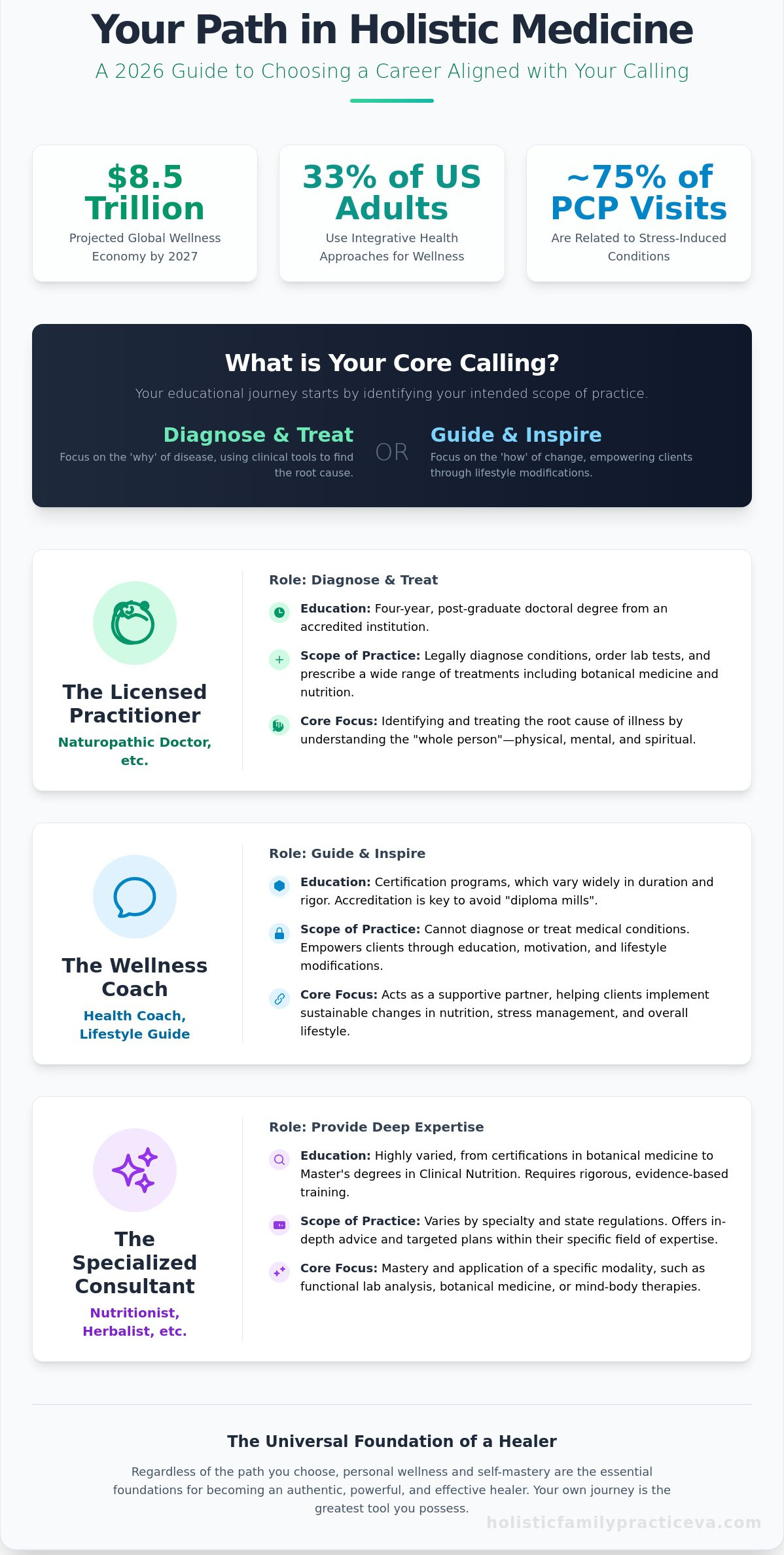
- Identify the specific career path that aligns with your soul’s calling, whether you aim to be a licensed practitioner, a wellness coach, or a specialized consultant.
- Discover how to study holistic medicine by navigating the complex world of accredited degrees and certifications to ensure your education carries professional weight.
- Gain a step-by-step framework for evaluating programs based on your unique career goals and the rigorous standards of official accrediting bodies.
- Understand why personal wellness and self-mastery are the essential foundations for becoming an authentic, powerful, and effective healer.
Understanding the Holistic Landscape: What Does It Mean to Study Holistic Medicine?
Choosing to learn how to study holistic medicine means embarking on a journey that looks at the person, not just the pathology. It’s a “whole-person” approach where you’ll explore the intricate connections between physical, mental, emotional, and spiritual health. While traditional paths often focus on the “what” of a disease, your training will focus on the “why.” This philosophy centers on identifying the root cause of an illness rather than just masking symptoms with a temporary fix. Understanding Holistic Health requires recognizing that a skin rash might actually be a cry for help from the gut, or that chronic fatigue could stem from emotional burnout. You’re learning to be a detective of the human spirit.
In 2026, the field demands a sophisticated blend of ancient botanical wisdom and cutting-edge evidence-based science. It’s vital to distinguish between “holistic” as a broad philosophy and specific disciplines. For instance, Naturopathic Medicine is a distinct primary care profession requiring a four-year doctoral degree. Functional Medicine focuses heavily on the biochemical pathways of the body. Both fall under the holistic umbrella, but their educational requirements vary. True holistic mastery requires you to be as comfortable reading a peer-reviewed journal as you are discussing a patient’s spiritual connection to their community. It’s a calling that must come from your soul to be truly effective.
Holistic vs. Conventional Medical Education
Traditional medical schools often follow a “symptom-suppression” model. Students learn to match a diagnosis with a pharmaceutical intervention or surgical procedure. In contrast, holistic education utilizes a “wellness-optimization” model. You’ll learn to view the patient as a partner, not a passive recipient of care. This therapeutic partnership is essential for long-term healing. Data from the National Center for Complementary and Integrative Health shows that 33% of US adults now use integrative health approaches. This shift is driving a massive demand for practitioners who listen, validate, and empower their patients to take an active role in their own health journey.
The Core Pillars of a Holistic Curriculum
When you research how to study holistic medicine, you’ll find a curriculum built on three essential pillars: Clinical Nutrition, Botanical Medicine, and Lifestyle Counseling. You won’t just learn that vegetables are healthy; you’ll study how specific phytonutrients interact with DNA to turn genes on or off. Modern programs also emphasize “Knowing Your Numbers.” This involves functional lab analysis, such as looking at a 2025 comprehensive blood chemistry report to find patterns before they become a clinical disease.
Psychology and emotional health are non-negotiable components of the curriculum. Because 75% of primary care visits are related to stress-induced conditions, your training must include tools for mental and emotional resilience. You’ll learn how to guide a patient through lifestyle changes that stick, moving beyond simple advice to deep, transformative coaching. This comprehensive education ensures you can care for the “Whole You” of every person who walks through your door, providing the patient, loving, and supportive care they deserve.
Practitioner, Coach, or Specialist? Identifying Your Career Path
Deciding how to study holistic medicine begins with a single, profound question: do you want to diagnose and treat, or do you want to guide and inspire? Your educational path depends entirely on your intended scope of practice. This isn’t just about the length of your schooling; it’s about the legal reality of your daily work. Practitioners hold the power to order labs and prescribe treatments, while coaches empower clients through lifestyle modifications. Understanding these boundaries early prevents legal friction and ensures you’re practicing with integrity.
Your choice should reflect your soul calling. Some feel a deep pull toward the science of pathology, while others thrive in the role of a supportive partner who walks alongside a client. Authenticity in practice means choosing a path that feels right in your bones. When your career aligns with your natural gifts, you become a more effective healer. The Defining Complementary and Integrative Health framework provided by the NCCIH offers a clear map of how these different roles intersect to support a patient’s whole-body wellness. Researching these distinctions helps you commit to a path that honors your unique vision for healing.
The Licensed Practitioner Path (ND, MD, DC)
If you feel called to be a primary care provider, the licensed practitioner path is your destination. Naturopathic Doctors (NDs) complete a rigorous four-year medical program involving over 4,100 hours of academic and clinical instruction. You’ll study the same basic sciences as an MD but with a focus on natural therapeutics. To practice, you must pass the NPLEX (Naturopathic Physicians Licensing Examinations). Currently, 26 U.S. jurisdictions recognize and license NDs, allowing them to diagnose and treat patients directly. This path requires a heavy investment of time and resources but offers the highest level of clinical authority.
The Holistic Health Coach & Consultant Path
Not everyone wants to manage disease; many want to prevent it. Holistic health coaching focuses on the 80% of chronic health issues driven by lifestyle choices. These certification programs typically last 6 to 12 months and emphasize behavioral change, nutrition basics, and motivational interviewing. It’s an ideal route for those who want to work in wellness centers or launch a private consulting practice. You won’t diagnose or prescribe, but you’ll help clients bridge the gap between their doctor’s recommendations and their daily habits. It’s a role centered on partnership and accountability.
Specialized Modalities: Acupuncture, Herbalism, and Beyond
Specialists master specific “tools” within the holistic toolkit. For example, a Master of Science in Oriental Medicine often requires 3,000 hours of study over three to four years. If you’re in the Mid-Atlantic region, the Virginia University of Integrative Medicine provides comprehensive training in Traditional Chinese Medicine (TCM). Clinical herbalists also fall into this category, often spending years studying plant chemistry and physiology. These specialists frequently collaborate within an integrative setting, providing targeted care that complements a patient’s broader health plan. If you’re curious about how these roles work together, observing a multidisciplinary team can offer valuable insights into your own future.
When you research how to study holistic medicine, keep your end goal in sight. Whether you’re analyzing blood panels as a doctor or teaching a client how to prep wholesome meals as a coach, your contribution is vital. The world needs your specific brand of healing, provided it’s built on a foundation of proper education and a clear understanding of your professional boundaries.
The Educational Roadmap: Degrees, Certifications, and Accreditation
Choosing the right path isn’t just about picking a school; it’s about securing your future ability to heal others with integrity. Accreditation is the most critical factor in your decision. If a program isn’t vetted by the Council on Naturopathic Medical Education (CNME) or the Accreditation Council for Education in Nutrition and Dietetics (ACEND), your degree might not lead to a professional license. When you consult the Association of Accredited Naturopathic Medical Colleges, you’ll see that these standards ensure a rigorous, science-backed education that protects both the practitioner and the patient. This ensures your training is recognized by state boards and insurance providers alike.
The hierarchy of education in this field is structured to match your specific career goals. Doctoral degrees (ND or NMD) require four years of post-graduate study and over 1,200 hours of supervised clinical training. Master’s degrees usually take two to three years and focus on specific modalities like acupuncture or clinical nutrition. Undergraduate degrees provide the essential foundation, while certificates offer a faster route into health coaching or specialized support roles. By 2026, approximately 85% of accredited schools have transitioned to hybrid learning models. This shift allows you to complete theory-heavy coursework online while attending in-person intensives for hands-on clinical mastery, making it easier to balance your studies with your current life.
- Confirm the school holds both regional and programmatic accreditation.
- Ensure the program qualifies you to sit for national board exams like the NPLEX.
- Look for a student-to-faculty ratio of 15:1 or lower for personalized mentorship.
- Verify the school has its own teaching clinic or established partnerships for clinical rotations.
- Research the graduation rate and job placement statistics from the last 24 months.
Undergraduate Foundations for Holistic Health
If you’re wondering how to study holistic medicine, your journey often begins with a Bachelor of Science. While you can enter the field from many backgrounds, majors in Biology, Chemistry, or Psychology offer the best preparation for the rigors of medical science. Most accredited naturopathic medical colleges require at least 90 semester hours of undergraduate credit, including specific prerequisites like Organic Chemistry and Biochemistry. A B.S. in Holistic Health serves as an excellent stepping stone, helping you understand the connection between mind, body, and soul before you even reach graduate school.
Advanced Functional Medicine Mastery
Education doesn’t end when you receive your license. Many practitioners choose to “add-on” specialized training to deepen their expertise and better serve their community. This is a vital part of how to study holistic medicine throughout your entire career. You can pursue Advanced Functional Medicine to stay at the forefront of diagnostic technology. For example, Dr. Steele’s approach to Functional Medicine Lab Panel Mastery empowers clinicians to look beyond standard ranges and find the root cause of health issues. Staying current with these tools is essential for any provider who wants to offer truly personalized care and help patients understand their own health data effectively.
How to Evaluate Holistic Medicine Programs: A Step-by-Step Guide
Choosing your educational path is a powerful commitment to your future self and the patients you’ll eventually serve. It’s about finding a space that honors the whole person while providing the clinical rigor you need to be a safe, effective practitioner. When you’re researching how to study holistic medicine, follow these five steps to ensure your chosen program aligns with your soul’s calling and professional needs.
Step 1: Define your end goal. Understanding your professional destination is the first step in learning how to study holistic medicine effectively. Visualize your ideal Tuesday morning. Are you running a private sanctuary in your community, or are you collaborating with surgeons in a hospital? Your daily work life dictates the level of licensure you need. If you want to prescribe medication or order diagnostic imaging in states like Oregon or Vermont, you’ll need a four-year naturopathic medical degree.
Step 2: Check for accreditation. This is non-negotiable for professional credibility. For naturopathic medicine, verify that the program is recognized by the Council on Naturopathic Medical Education (CNME). As of 2024, only seven schools in North America meet these rigorous standards. Accreditation ensures you can sit for board exams like the NPLEX and secure professional liability insurance.
Step 3: Review the faculty. You must look for a balance between researchers and active practitioners. You want mentors who spent yesterday in a clinic treating real patients; not just those who haven’t left a classroom in a decade. Check if the instructors have at least 5 to 10 years of clinical experience before they started teaching. This ensures they can guide you through the nuances of patient care beyond what’s written in a textbook.
Step 4: Analyze the clinical training. Deeply investigate the hands-on experience provided. Theory is beautiful, but mastery happens in the clinic. Top-tier programs require over 1,200 hours of supervised clinical rotations. Ask if these rotations happen in a school-run clinic or if you’ll have opportunities in diverse community health settings to see a wide range of conditions.
Step 5: Financial planning. Finally, look beyond the sticker price at the potential return on investment. Tuition for holistic medical programs often ranges from $25,000 to $43,000 annually. The Global Wellness Institute reported that the wellness economy reached $5.6 trillion in 2022; showing a massive, growing demand for practitioners who understand the root cause of illness.
Questions to Ask Admissions Officers
Don’t be afraid to dig deep during your interview. Ask for the program’s NPLEX Part I and Part II pass rates from the last three years. Inquire if their philosophy is “vitalist,” focusing on the body’s innate healing intelligence, or strictly “biomedical.” You should also ask if they provide business courses; 65% of holistic practitioners eventually open their own practice, so you need to know how to manage a budget and market your services.
Red Flags to Avoid in Holistic Schooling
Be skeptical of any program promising a “doctorate” in 6 months or through 100% online coursework without clinical hours. These “diploma mills” often use unrecognized accreditation bodies to look legitimate. Another red flag is a lack of transparency regarding lab fees and equipment costs, which can add $2,000 to your annual expenses. Finally, avoid programs that treat the body like a machine and ignore the mental and emotional components of healing; true holistic medicine requires a “mind, body, and soul” approach.
If you’re ready to begin your own healing journey before you start your career, book a discovery call with our team today.
Beyond the Classroom: Cultivating the Mindset of a Holistic Healer
Earning your diploma is a significant milestone, but it’s really just your entry fee into the world of healing. Learning how to study holistic medicine involves much more than memorizing the 206 bones in the human body or the complex pathways of the Krebs cycle. It requires a profound, lifelong commitment to personal mastery. While your textbooks provide the scientific foundation, your character and presence will determine your effectiveness in the exam room.
The “Healer, Heal Thyself” philosophy is central to this profession. You can’t lead a patient to a place of wellness that you haven’t explored yourself. A 2022 study published in the Journal of Integrative Medicine found that practitioners who maintain their own rigorous wellness routines report 34% higher patient trust levels. Your personal wellness journey serves as your primary laboratory. If you aren’t actively seeking the root cause of your own imbalances, your clinical advice will lack the “Gentle Authority” necessary to inspire change in others.
Biochemistry provides the map, but intuition is your compass. While 80% of your training might focus on hard data, your success often depends on the 20% that comes from the soul. Intuition and authenticity are just as vital as understanding nutrient absorption. Patients don’t want a walking medical encyclopedia; they want a human who can sense the unspoken grief behind a physical symptom or the hesitation in a voice. Seek out a mentor who embodies this balance. Find someone who has practiced for at least 10 years and demonstrates how to hold space for a patient’s emotional needs without losing clinical focus.
Building Your Professional Network
Success in this field depends on the community you build. Seek out internships and shadowing opportunities in an integrative primary care setting to see how theory translates into real-world results. Join professional organizations like the American Nurses Association (ANA), founded in 1896, or the American Association of Nurse Practitioners (AANP). These groups offer access to 500+ hours of continuing education and connect you with a community of wellness partners who share your wholesome approach to care.
Empowering Your Future Patients
Your education must eventually shift from gathering knowledge to “Empowering the Health Journey” of those you serve. This requires mastering compassionate communication. Research from 2023 indicates that patients who feel “heard” are 40% more likely to adhere to complex treatment plans. Your goal is to transition from being a student who knows the answers to a guide who helps patients find their own path. You’re teaching them to know their numbers and understand their bodies, moving them from passive recipients of care to active participants in their own mind, body, and soul healing.
- Personal Mastery: Commit to daily practices that keep your own energy clear and focused.
- Clinical Shadowing: Aim for at least 200 hours of direct observation with a seasoned holistic provider.
- Active Listening: Practice the art of silence to allow the patient’s full story to emerge.
- Authentic Presence: Bring your whole self to the practice to encourage your patients to do the same.
Take the First Step Toward Your Healing Career
Learning how to study holistic medicine in 2026 involves more than just selecting a degree; it requires a deep commitment to integrating the mind, body, and soul. You’ve discovered the essential differences between practitioner and coaching roles while learning to navigate the complex world of accreditation. This roadmap ensures your education focuses on root-cause healing rather than temporary fixes. Dr. Erica Steele, a Board Certified Naturopathic Doctor, has already empowered over 2,500 patients through this transformative, educational approach. She specializes in bridging the gap between clinical expertise and intuitive wellness. Your journey toward mastery is a personal calling that deserves a supportive, expert guide. You’re ready to move beyond theory and start making a tangible impact on the lives of others. Don’t wait for the perfect moment to begin your education. Start your journey by booking a Discovery Call with Dr. Erica Steele to align your career goals with your authentic purpose. Your future as a healer starts today.
Frequently Asked Questions
Do I need a medical degree to practice holistic medicine?
You don’t always need a traditional MD degree to practice, though your specific career path dictates the requirements. Practitioners like health coaches or herbalists often only need specialized certifications to start their journey. However, if you want to be a Naturopathic Doctor, you must complete a 4-year doctoral program. Data from 2023 shows that 25% of alternative medicine practitioners are self-employed with various professional certifications.
How long does it take to become a holistic doctor?
It typically takes 4 years of post-graduate study to become a licensed Naturopathic Doctor (ND). This follows a 4-year undergraduate degree, totaling 8 years of higher education. If you’re researching how to study holistic medicine through shorter paths, a certificate in health coaching can take as little as 6 to 12 months. This allows you to begin empowering others while you continue your own educational mastery.
Is holistic medicine education available online?
Yes, many accredited institutions offer online programs, though clinical components often require in-person hours. For instance, the University of Arizona Center for Integrative Medicine offers a 1,000-hour fellowship that is predominantly online. However, the Council on Naturopathic Medical Education (CNME) requires that core clinical training for ND degrees happens at physical campus locations. This ensures you gain the intuitive, hands-on experience necessary to treat the whole person.
What is the difference between a naturopathic doctor and a health coach?
The primary difference lies in the scope of practice and the 4,000-plus hours of medical training NDs receive. Naturopathic Doctors are trained as primary care physicians who can diagnose and treat illnesses in 23 states as of 2024. Health coaches generally focus on lifestyle habits and behavioral changes. They typically require about 200 to 500 hours of training through organizations like the National Board for Health and Wellness Coaching.
Can I study holistic medicine if I am already a nurse or MD?
Yes, licensed medical professionals can pursue specialized certifications to integrate holistic principles into their existing practice. The American Board of Integrative Medicine (ABOIM) provides a pathway for MDs and DOs to become board-certified in integrative medicine. Nurses can earn a Holistic Nurse Board Certified (HN-BC) credential after completing 48 contact hours of continuing education. It’s a powerful way to bridge the gap between traditional medicine and wholesome wellness.
What are the best accredited schools for holistic health in the US?
Bastyr University and the National University of Natural Medicine (NUNM) are two of the most recognized accredited institutions. Bastyr has campuses in Washington and California, while NUNM is located in Portland, Oregon. These schools are accredited by the Northwest Commission on Colleges and Universities. They provide rigorous training that focuses on finding the root cause of illness rather than just managing symptoms through passive treatment.
What kind of salary can I expect after studying holistic medicine?
Salaries vary widely, but a licensed Naturopathic Doctor earns an average of $90,000 to $120,000 annually as of 2023. Health coaches might start around $50,000 per year, while specialized practitioners in private practice can exceed $150,000 depending on their patient volume. Your income often reflects your commitment to the journey and how effectively you empower your community to take charge of their own health numbers.
How do I know if a holistic health program is legitimate?
You can verify a program’s legitimacy by checking if it’s recognized by the U.S. Department of Education or the CNME. Legitimate programs will have a clear curriculum, transparent tuition costs, and a history of graduates passing national board exams. In 2024, there are only 7 accredited naturopathic medical programs in North America. Checking for these credentials is the most reliable way to learn how to study holistic medicine at a professional level.